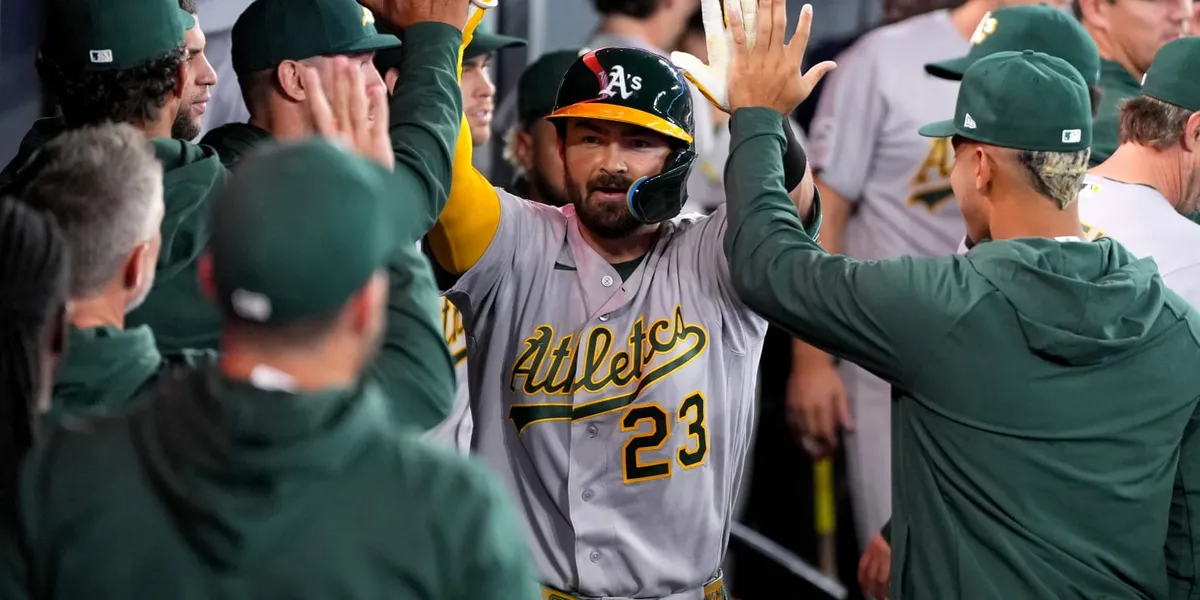
Who is involved
Before the recent developments in Shea Langeliers’ career, he was viewed as a promising but unproven talent in the world of baseball. His potential was recognized, but expectations were tempered by the typical challenges faced by young catchers in Major League Baseball. Catching is a demanding position that requires not only physical skills but also a deep understanding of the game. Langeliers, who began catching full-time at the age of 16 or 17, was still in the process of establishing himself as a reliable player.
However, last year marked a decisive moment for Langeliers. He hit an impressive 31 homers and drove in 72 RBIs over the course of 123 games, showcasing his ability to contribute significantly to his team’s offense. His .861 OPS highlighted his effectiveness at the plate, and his performance against top pitchers, including a Grand Slam off Skubal, underscored his growing prowess. This breakout season not only elevated his status among catchers but also shifted the expectations surrounding his role in the league.
The direct effects of Langeliers’ performance were felt by both him and his team. As he emerged as one of the top hitting catchers in baseball, the pressure on him to deliver consistently increased. Langeliers himself acknowledged the importance of his role, stating, “I always viewed myself as a defensive first catcher.” This mindset reflects his commitment to not just hitting but also mastering the nuances of catching, such as controlling the pitching staff and managing the rhythm of the game.
Experts in baseball have noted the significance of Langeliers’ development. His improvement in framing pitches over the past year has been particularly noteworthy, as it is a crucial skill for catchers that can greatly influence a game’s outcome. Langeliers believes that catchers possess the best feel for the strike zone, which is essential for guiding pitchers and making strategic decisions during games. His dedication to enhancing his defensive skills complements his offensive achievements, making him a well-rounded player.
Moreover, Langeliers’ approach to leadership on the field is also evolving. He has expressed that he is not the type to be overly vocal or aggressive, stating, “I’m not a rah, rah guy. I’m not going to go out there and yell at people.” This reflects a more measured style of leadership, focusing on performance and execution rather than motivation through loud encouragement. His ability to lead by example is becoming increasingly important as he takes on a more prominent role within the team.
As Langeliers continues to build on his success, the expectations for him will only grow. His performance last year was a coming-out party, but it also sets a new standard for what is expected moving forward. The combination of his offensive capabilities and defensive skills positions him as a key player for his team, and the baseball community will be watching closely to see how he adapts to these heightened expectations.
In summary, Shea Langeliers’ journey from a promising young catcher to a top performer in the league illustrates a significant shift in his career. His impressive statistics and commitment to both hitting and defense have redefined his role, making him a player to watch in the coming seasons. As he continues to develop, the impact of his performance will resonate not only for himself but also for his team and the broader baseball landscape.
