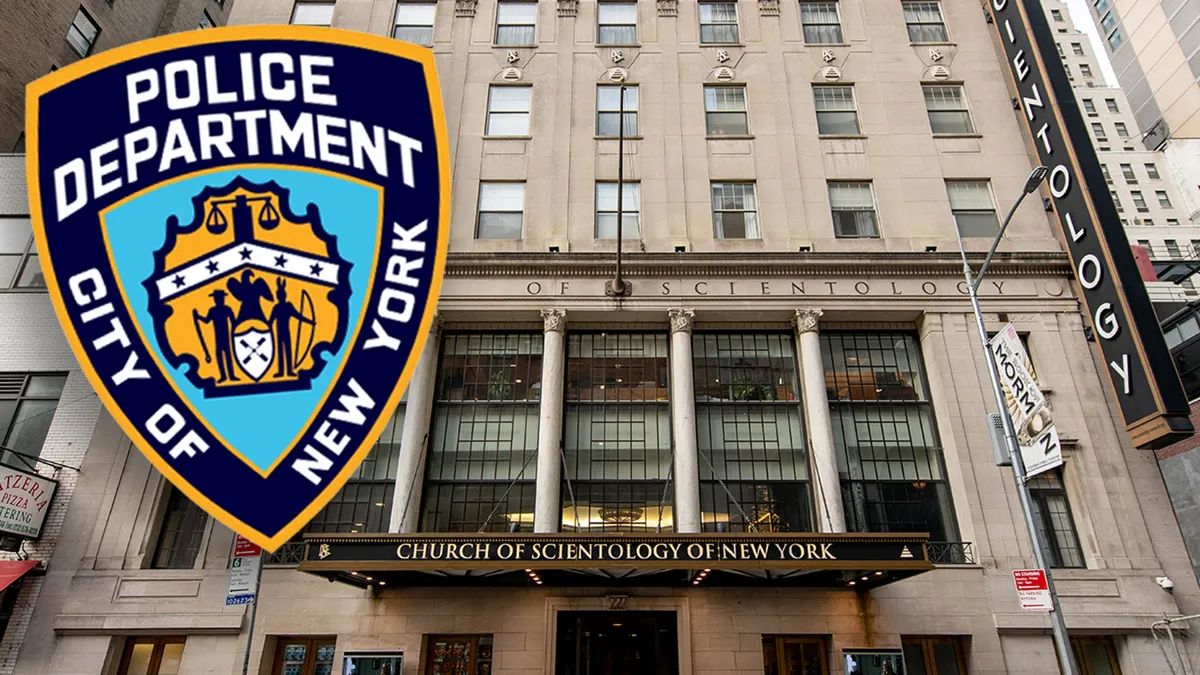
A group of around 50 teenagers forced their way into a Church of Scientology building in New York City on May 3, 2026, injuring a security guard and causing significant property damage. This incident is part of a disturbing trend linked to social media, where groups film themselves entering Scientology properties for online attention.
The break-in occurred at approximately 4:24 PM at the Church of Scientology on West 46th Street, near Times Square. The teenagers entered through a locked side door and proceeded to vandalize the premises, which raises questions about the motivations behind such reckless behavior. Are these actions merely for social media clout? The answer seems to be yes, as videos of similar incidents circulate widely on platforms like TikTok and Instagram.
A security guard, aged 30, suffered minor injuries during the chaotic event when he was kicked by one of the assailants. Furthermore, during this violent encounter, one teenager hurled a racial slur at a staff member—an act that has drawn condemnation from the Church of Scientology.
The Church responded strongly, stating that this type of behavior endangers not only their staff but also parishioners and visitors. They characterized the incident as trespassing and harassment rather than any form of legitimate protest or civic activity. In their words: “Turning them into targets for viral stunts is not journalism… It is trespass, harassment, and disruption of religious spaces.”
This incident is not isolated; similar break-ins have been reported in Los Angeles, prompting local police to monitor this emerging social media trend known as ‘Scientology speed running.’ As these events unfold, law enforcement agencies are likely to increase their vigilance around such properties.
The Church of Scientology has called for arrests related to these acts, labeling them as hate crimes. Observers note that these incidents reflect broader societal issues surrounding youth behavior influenced by social media trends.
The investigation into this latest break-in is ongoing, with no arrests made so far. As authorities delve deeper into this troubling phenomenon, it remains essential to consider how social media can distort perceptions and fuel destructive actions among young people.
