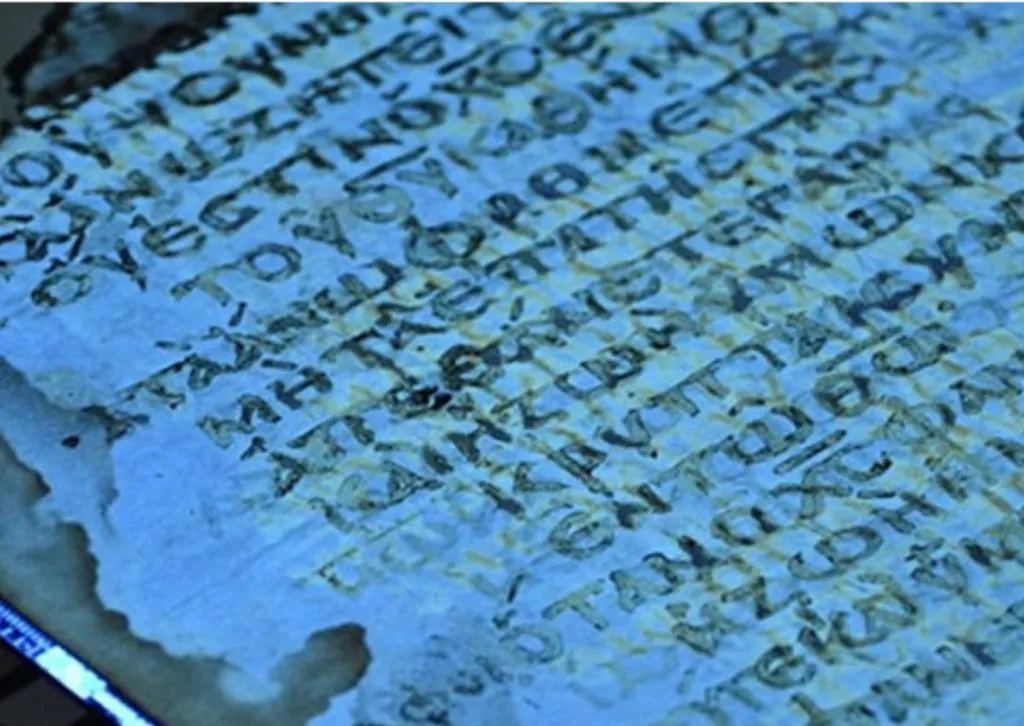
A team of researchers from the University of Glasgow has reconstituted 42 pages from an ancient manuscript, known as Codex H, which contains letters from the Apostle Paul. This groundbreaking work offers an unprecedented glimpse into early Christian reading practices.
The Codex H dates back to the 6th century and was dismantled in the 13th century at the Great Lavra Monastery on Mount Athos. Over time, fragments of this manuscript became scattered across various European libraries, making it difficult for scholars to study its full context.
This discovery is significant because it not only enriches our understanding of the content of Scripture but also reveals how these texts were transmitted and appropriated by early Christian communities. The researchers utilized multispectral imaging to uncover traces of ink that were invisible to the naked eye, allowing them to piece together these lost pages.
Key findings:
- The recovered pages include well-known passages from the letters of Saint Paul.
- The manuscript features ancient reading structures that highlight how early Christians engaged with the text.
- Codex H contains an “euthalian apparatus,” which consists of prefaces and explanatory notes that guided readers.
This research also sheds light on figures like Saint James the Less, one of Jesus’ twelve apostles and the first bishop of Jerusalem, who was martyred in 62 AD. His letter is part of the New Testament canon and provides additional context for understanding early Christian thought.
The implications are vast. Scholars now have access to a digital edition of Codex H, available in open access formats, which can facilitate further study and engagement with these ancient texts. As this research unfolds, it promises to deepen our comprehension of how foundational Christian doctrines were shaped in their formative years.
