Introduction
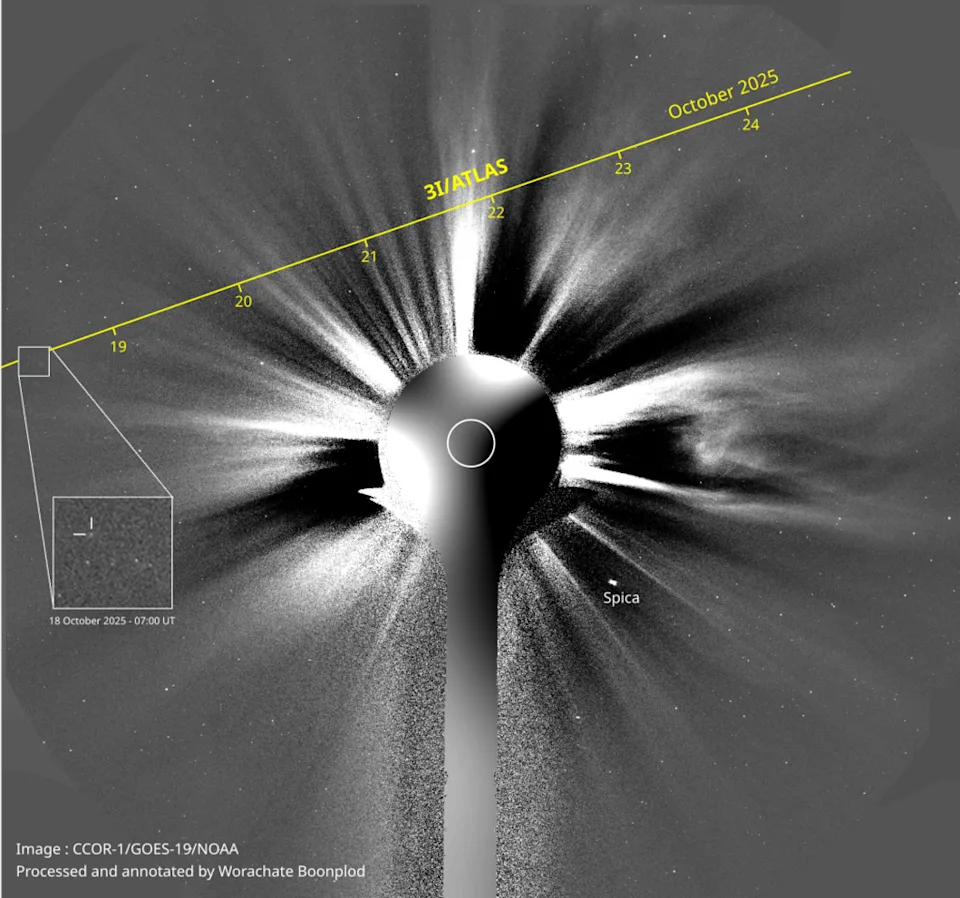
The discovery and study of interstellar comets have become a focal point in astronomical research, particularly in understanding our universe and its origins. Interstellar comet 3I Atlas, identified by NASA in 2022, has sparked significant interest among scientists due to its foreign origins and potential to unveil secrets about the interstellar medium and the processes that govern celestial bodies beyond our Solar System.
Recent Discoveries and Characteristics
Interstellar comet 3I Atlas is speculated to have originated from the stellar neighborhood of the Alpha Centauri system, an area rich in star formation and potentially hospitable environments for planetary systems. Initial observations indicate that 3I Atlas is approximately 1.5 kilometres in diameter, making it relatively small compared to comets within our Solar System.
In October 2022, the comet made its closest approach to the Sun, allowing astronomers to study its tail and nucleus with increased precision. Data collected from the Hubble Space Telescope and various ground-based observatories revealed that 3I Atlas has a highly elongated orbit, indicating that it will not return to our Solar System after its current passage.
Navigating the Cosmic Landscape
The implications of studying 3I Atlas extend beyond mere observation; they touch upon larger questions regarding the formation of celestial bodies and the dynamics of interstellar travel. The unique properties of 3I Atlas serve as a window into understanding how material from outside our Solar System interacts with the Sun’s gravitational field. This aligns with NASA’s broader mission of investigating the diversity and evolution of celestial phenomena.
Additionally, researchers are examining the chemical composition of 3I Atlas to determine whether it carries organic molecules or compounds that might suggest prebiotic chemistry. This could enhance our grasp of the building blocks necessary for life, offering insights into the early processes that might allow for life to develop on distant planets.
Future Prospects
As interest in interstellar comets grows, the scientific community aims to develop more sophisticated models that simulate the behaviours of such bodies in the cosmos. Future missions may include more advanced observatories, which would allow for extended studies of interstellar bodies, potentially leading to the discovery of additional comets like 3I Atlas.
Conclusion
Interstellar comet 3I Atlas exemplifies the significance of ongoing space exploration and research. Its journey across our Solar System offers a rare glimpse into the nature of interstellar objects and the cosmic processes that have shaped our universe. As NASA continues to analyse data from 3I Atlas, the findings may pave the way for new theories about cosmic evolution and potentially reshape our understanding of life’s origins beyond Earth.
