Introduction
The concept of celestial bodies sharing Earth’s orbit has intrigued scientists for centuries. Recent discussions sparked by NASA’s findings suggest that our planet might have more than one moon, leading to implications for our understanding of space dynamics. This revelation follows the ongoing exploration and observation of near-Earth asteroids, which have proven to be crucial in understanding our solar system’s history.
Earth’s Two Moons: A Reality?
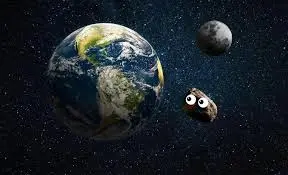
NASA scientists have proposed that Earth could experience a temporary second moon—called a “mini-moon”—during the passage of certain asteroids in Earth’s gravitational influence. These mini-moons are typically asteroids caught by Earth’s gravity for short periods, often a few months to a year. The latest research reported by the Lunar and Planetary Institute highlights that these transient satellites can offer significant insights into the history and formation of our planet. Notably, 2020 CD3, identified in 2020, and others, serve as evidence of this phenomenon.
Astrological Studies and Observations
In tandem with the exploration of mini-moons, NASA has intensified its efforts in studying NEAs (Near-Earth Asteroids) that pose a potential threat to our planet. According to the latest reports from the Near-Earth Object Program, over 27,000 NEAs have been catalogued, underscoring the importance of monitoring these objects closely. Understanding their compositions, trajectories, and possible impact scenarios is essential for planetary defence initiatives. As asteroids are the building blocks of the planets, studying them also helps astronomers learn more about the early solar system.
Conclusion and Future Significance
The ongoing studies of Earth’s temporary moons and the expansive research into near-Earth asteroids unravel new layers of our collective knowledge about the solar system. These unexpected findings encourage further exploration and can potentially assist in developing more effective planetary defence strategies. Looking ahead, advancements in telescope technologies and missions like NASA’s Artemis program aim to deepen our understanding of not just Earth’s relationship with transient moons and asteroids, but also the broader implications on space exploration. As we continue to unravel the mysteries of our celestial environment, such findings will be invaluable for both scientific insight and defence mechanisms.
