Introduction
The recent announcement by NASA regarding the discovery of two moons orbiting Earth has generated significant excitement within the scientific community. This unexpected finding not only enhances our understanding of the celestial dynamics surrounding our planet but also opens new avenues for research in planetary science. The significance of this discovery lies in its potential to unveil the mysteries of Earth’s gravitational dance with other celestial bodies in our solar system.
Details of the Discovery
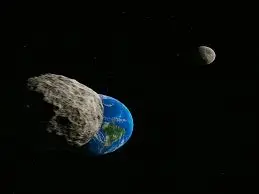
NASA scientists unveiled the discovery during a press conference, highlighting that the two recently identified moons, designated as 2020 CD3 and 2020 XL5, are temporary captures of Earth’s gravity. The former is approximately the size of a small car, and it has been orbiting Earth for around three years, while the latter is larger and is estimated to remain in orbit for a longer period. These moons are classified as “mini-moons” and are notably smaller than the Moon we typically observe in the night sky.
2020 CD3 was first detected in February 2020, but researchers only recently confirmed its status as a quasi-satellite. On the other hand, 2020 XL5, identified earlier this year, presents an exciting opportunity for astronomers to study celestial bodies without the need for extensive space missions.
Significance and Implications for Research
The existence of these two new moons sheds light on the gravitational interactions that occur in the Earth-Moon system and may offer insights into the history of the early solar system. Understanding how these mini-moons are captured and exist in orbit could enhance our knowledge of the dynamics of space debris and the formation of celestial bodies.
Conclusion
This discovery serves as a powerful reminder of the wonders of our universe and the ongoing developments in space exploration. With the continuing advancement of technology and observational instruments, such as the upcoming James Webb Space Telescope, researchers are optimistic about uncovering more intriguing phenomena in our solar system. As NASA continues to study these newfound moons, it is expected that further insights will emerge, advancing our understanding of planetary science and the intriguing gravitational intricacies that govern our place in the cosmos.
