Reaction from the field
The upcoming NASA Artemis II mission, scheduled for April 1, 2026, represents a monumental leap in human space exploration, with profound implications for the future of lunar activities. This mission will be the first crewed flight to orbit the Moon since the Apollo program, aiming to send four astronauts on a 10-day journey around the lunar body. The stakes are high, as this mission not only seeks to rekindle human presence beyond low Earth orbit but also to lay the groundwork for sustained exploration and development on the Moon.
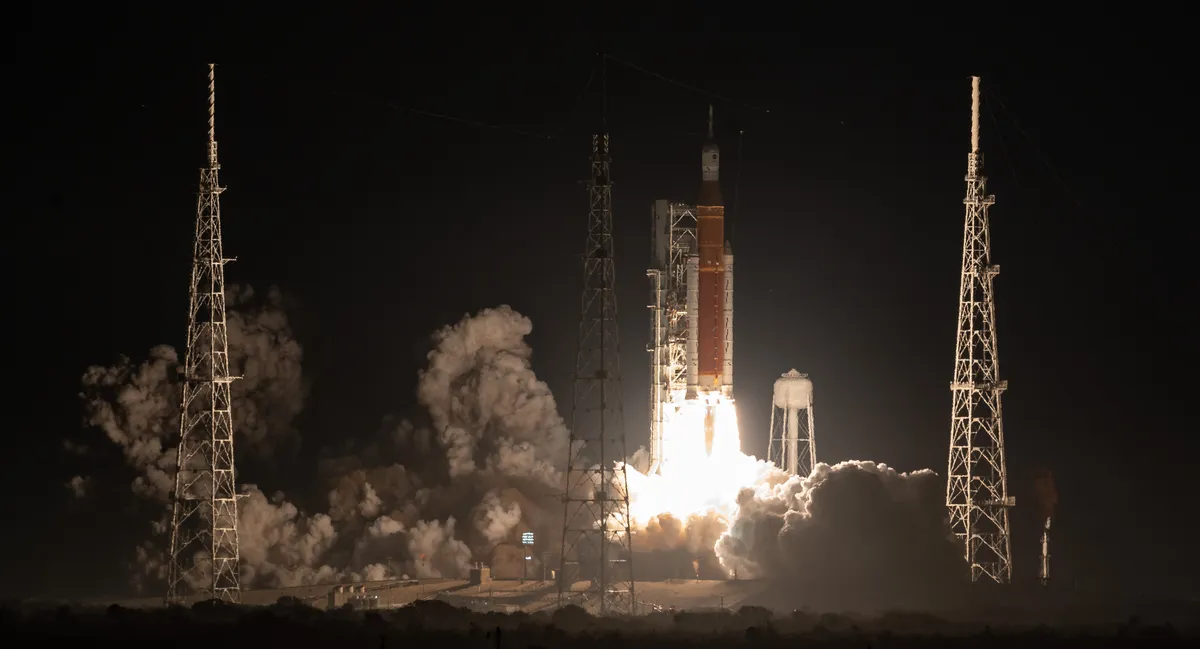
Artemis II will utilize the Space Launch System (SLS) heavy lift rocket to propel the Orion spacecraft into orbit. This powerful rocket is designed to carry astronauts further than ever before, with Orion set to travel over 400,000 kilometers from Earth. As Scott Pace, a prominent figure in NASA’s exploration efforts, stated, “We’re about to send humans in orbit around the Moon again.” This mission is pivotal in demonstrating the capabilities of the SLS and Orion as they prepare for future lunar landings.
The mission’s trajectory includes a flyby of the Moon’s far side, an area that has not been observed by human eyes. This unprecedented journey will not only enhance our understanding of the Moon’s geology but also test the spacecraft’s systems in a deep-space environment. As the capsule re-enters Earth’s atmosphere at speeds of 32,187 km/h and temperatures reaching 2,200°C, it will put the heat shield to the test, which Scott Pace noted has had a “long and complicated history.”
Artemis II is part of a broader vision for lunar exploration, which aims to establish a sustainable human presence on the Moon. NASA plans to conduct at least one Moon landing per year starting in 2028, with the goal of constructing a Moon base by 2030. This ambitious timeline underscores the urgency and importance of the Artemis program, as Jared Isaacman aptly summarized, “This time the goal is not flags and footprints. This time the goal is to stay.” The mission is not just about exploration; it is about building a foundation for future endeavors.
In collaboration with the Canadian Space Agency, NASA is expanding its international partnerships in space exploration. The inclusion of astronauts from various countries signifies a collective commitment to exploring the Moon and beyond. Jeremy Hansen, a Canadian astronaut, will be among the crew, highlighting the collaborative spirit of this mission.
As the launch date approaches, excitement builds within the space community and beyond. The implications of Artemis II extend beyond scientific exploration; they represent a renewed commitment to human spaceflight and the potential for international cooperation in space. However, details remain unconfirmed regarding the final crew selection and specific mission parameters.
With Artemis II, NASA is poised to not only revisit the Moon but to redefine humanity’s relationship with it. The mission stands as a testament to the enduring spirit of exploration and the quest for knowledge that drives us to venture into the unknown. As we look forward to this historic launch, the world watches closely, eager to witness the next chapter in human space exploration.
