How it unfolded
As NASA prepares for a significant milestone in space exploration, the Artemis II launch is set to take place on April 1, 2026, at 6:24 p.m. EDT from the Kennedy Space Center in Florida. This mission marks NASA’s first crewed endeavor under the Artemis program, which aims to return humans to the Moon for the first time since the 1970s. The excitement surrounding this launch is palpable, as it signifies a new era in lunar exploration.
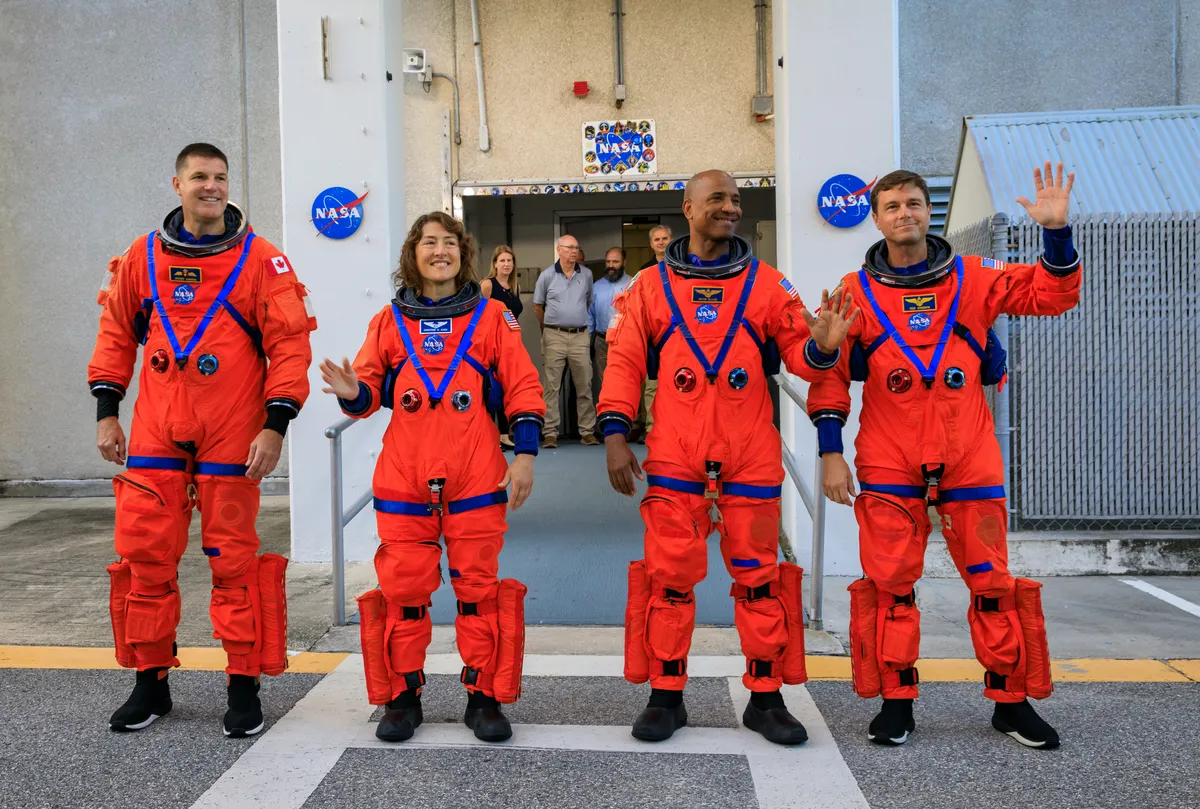
The Artemis II mission will send a crew of four astronauts on a 10-day journey around the Moon. The crew includes Canadian Space Agency astronaut Jeremy Hansen and NASA astronauts Christina Koch, Victor Glover, and Reid Wiseman. This diverse team is poised to make history as they embark on a journey that will take them farther from Earth than any humans have traveled since the Apollo 13 mission, which set the record at 248,655 miles from our planet.
NASA’s Space Launch System (SLS) rocket will be utilized for this mission, a powerful vehicle designed to carry astronauts and cargo beyond low Earth orbit. The Orion spacecraft, which will house the crew, will also be tested for its life support systems for the first time with humans aboard. This testing is crucial for ensuring the safety and well-being of astronauts on future missions to the Moon and beyond.
Leading up to the launch, NASA will provide extensive coverage of prelaunch, launch, and mission events on its YouTube channel. The agency has committed to keeping the public informed with real-time updates, stating, “NASA will continuously update this Artemis II briefings and mission events page throughout prelaunch, launch, and mission activities.” This commitment to transparency allows space enthusiasts and the general public to engage with the mission as it unfolds.
During the mission, the crew will participate in live conversations known as downlinks, allowing them to share their experiences and insights with audiences back on Earth. This interactive element is designed to inspire the next generation of explorers and foster a deeper connection between the mission and the public. Additionally, a post-launch news conference is scheduled approximately two-and-a-half hours after the launch, providing further insights into the mission’s progress.
As the countdown to the launch continues, NASA is ensuring that all preparations are in place for a successful mission. The crew’s return to Earth is expected to occur on April 10, 2026, with a splashdown in the Pacific Ocean. This timeline highlights the meticulous planning and coordination involved in such a complex operation, emphasizing the importance of each phase of the mission.
The Artemis II launch is not just a technical achievement; it represents a significant step forward in humanity’s quest to explore beyond our planet. For the astronauts involved, this mission is a culmination of years of training and dedication, and it serves as a testament to international collaboration in space exploration. As NASA continues to push the boundaries of what is possible, the Artemis II mission stands as a beacon of hope and inspiration for future generations of explorers.
Details remain unconfirmed regarding any last-minute changes to the launch schedule, but NASA has assured the public that all events are listed in Eastern Time and are subject to change. As the launch date approaches, anticipation builds for what promises to be a historic moment in space exploration.
