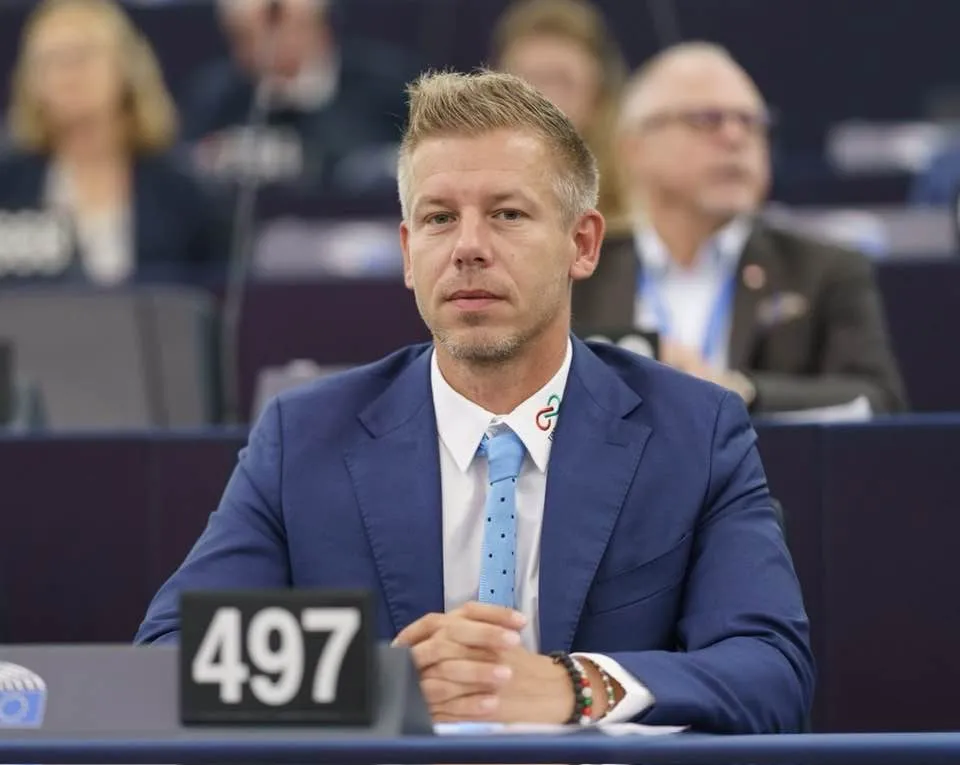
“Magyar accused Orbán’s government of systemic corruption and operating in the interests of a small circle of political and economic elites,” stated Péter Magyar, the newly elected leader of the opposition Tisza party. This bold assertion encapsulates the dramatic shift in Hungary’s political landscape following the recent elections, where Magyar’s party emerged victorious, marking the end of Viktor Orbán’s 16-year reign.
Péter Magyar, born in 1981, began his political journey with Fidesz in 2002. However, his political rise truly began in early 2024, when he distanced himself from the party amid a scandal involving pardons that led to significant public outcry. This pivotal moment catalyzed his break with Fidesz and laid the groundwork for the formation of the Tisza party, which was officially registered in 2020.
In the European Parliament elections held in June 2024, Tisza garnered an impressive 30% of the vote, translating to approximately 1.3 million voters. This surge in support energized a broad segment of Hungarian society, reflecting a growing discontent with the status quo. Magyar’s combative style and conservative views have drawn both admiration and criticism, but his ability to mobilize the public was evident when 100,000 people attended the National March on April 6, 2024.
Prior to his political ascent, Magyar spent most of his professional life within the political framework established by Orbán. His recent victory was not just a personal achievement but a significant political event, as it represented a collective desire for change among the Hungarian populace. “It was a ‘painful’ election result,” Orbán remarked, acknowledging the shift in power dynamics.
Magyar’s personal life has also been a topic of interest; he divorced Judit Varga in 2023 and is a father to three children. His journey has not been without challenges, as he has faced criticism for his aggressive political tactics. Nevertheless, his determination to challenge the existing regime is evident in his statement, “I need an insurance policy in case I come into conflict with Orbán’s regime.” This sentiment resonates with many who feel disenfranchised by the current government.
The political landscape in Hungary is now poised for change, with Magyar leading the charge against systemic corruption and advocating for a more inclusive political environment. His rise has sparked discussions about the future direction of Hungarian politics, as he seeks to unite various factions under the Tisza banner.
As the dust settles from the recent elections, the next steps for Magyar and the Tisza party remain to be seen. Will they succeed in implementing their vision for Hungary, or will they face resistance from the entrenched political elite? Details remain unconfirmed, but the momentum behind Magyar’s movement suggests that he will continue to be a formidable force in Hungarian politics.
