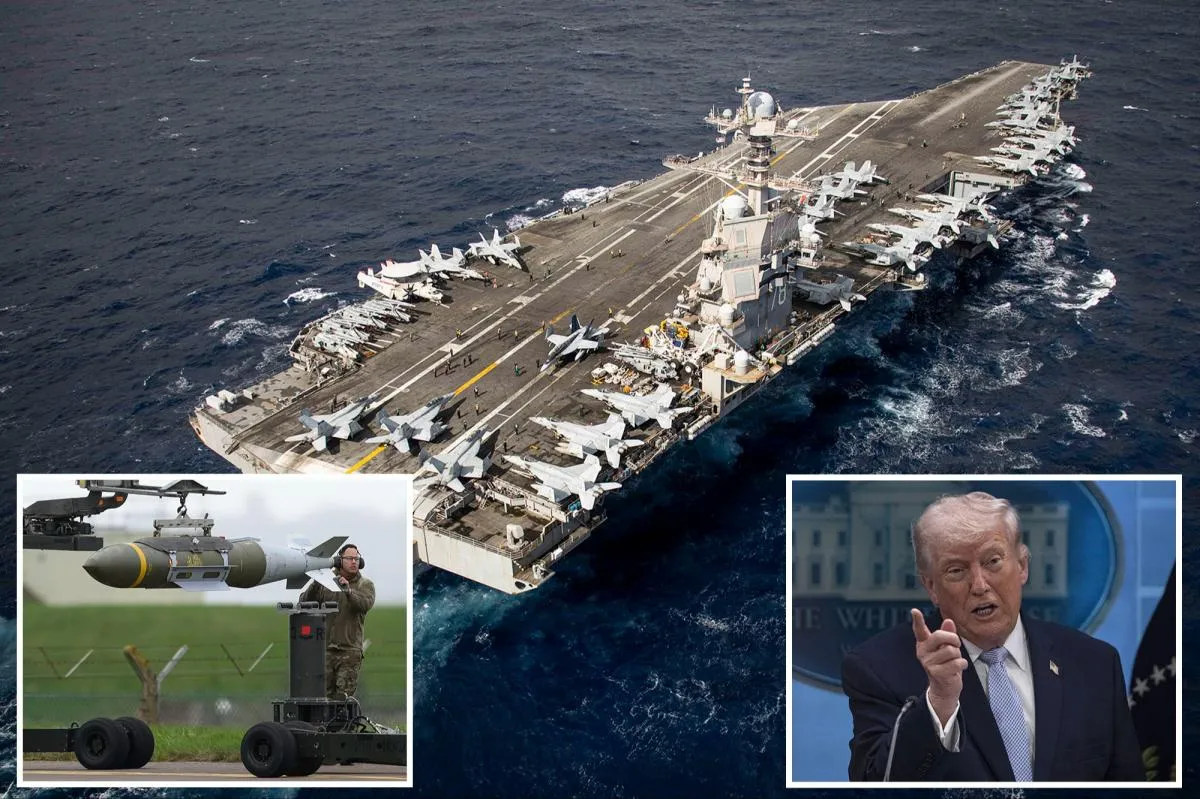
“We’re loading up the ships with the best weapons ever made, even at a higher level than we used to do a complete decimation,” stated President Trump, underscoring the high stakes involved in the ongoing peace talks between the United States and Iran. This statement comes as both nations engage in face-to-face negotiations in Pakistan, following a fragile ceasefire agreement reached on April 7, 2026.
The talks are a response to a devastating war that has claimed at least 3,000 lives in Iran and 2,020 in Lebanon, with the conflict severely disrupting the Persian Gulf’s role in the global economy. Energy prices have soared, with Brent crude reaching $94 per barrel, marking a 30% increase since the war began. The situation has prompted urgent discussions about the future of the Strait of Hormuz, a vital shipping route.
As negotiations unfold, the U.S. delegation, led by Vice President JD Vance, is pushing for significant concessions from Iran, including the handover of an estimated 1,000 pounds of enriched uranium and the full reopening of the Strait of Hormuz. In contrast, Iran’s delegation, headed by Parliament Speaker Mohammad Bagher Ghalibaf, has proposed charging transit fees for ships passing through the Strait, a suggestion that the U.S. has firmly rejected.
Pakistani officials have confirmed that talks have commenced, though details remain unconfirmed. “I cannot say whether they are sitting in the same room or in separate rooms, but talks have started and are progressing well,” a Pakistani official remarked, highlighting the cautious optimism surrounding the discussions.
President Trump remains resolute about the U.S. position, stating, “Let’s see what happens — maybe they make a deal, maybe they don’t. It doesn’t matter. From the standpoint of America, we win.” This sentiment reflects a broader strategy of leveraging military readiness as a negotiating tool, with U.S. warships reportedly being reloaded with ammunition in anticipation of a potential escalation should the talks falter.
The U.S. military is also taking steps to clear the Strait of Hormuz, which has been a focal point of tension in the region. Reports indicate that the military has begun setting conditions for clearing mines in the waterway, further complicating the negotiations. The U.S. aims to ensure safe passage for commercial vessels, which is critical for global trade.
As the talks progress, the international community watches closely, aware that the outcomes could reshape the geopolitical landscape of the Middle East. The focus remains on key issues such as sanctions, nuclear enrichment, and the strategic importance of the Strait of Hormuz. The stakes are high, and the potential for both conflict and resolution hangs in the balance.
In the coming days, further developments are expected as both sides continue to negotiate. The outcome of these talks could determine not only the future of U.S.-Iran relations but also the stability of the entire region.
