What the data shows
The upcoming World Cup, co-hosted by Canada, the United States, and Mexico, has sparked a crucial question: What are the implications of U.S. immigration enforcement, particularly by ICE, during this global event? The answer reveals a complex interplay of community safety, legal authority, and the psychological impact on immigrant populations.
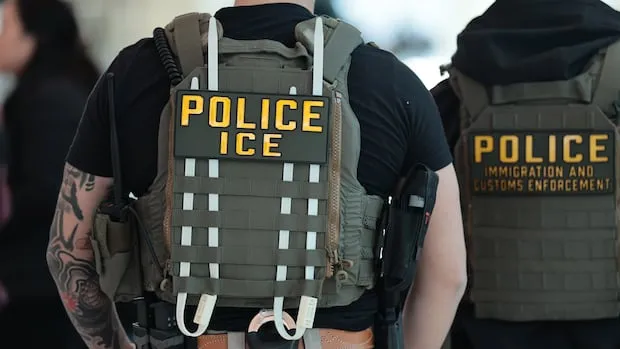
ICE, or Immigration and Customs Enforcement, has five offices in Canada, located in major cities such as Toronto and Vancouver. However, Canadian officials assert that ICE has no legal authority on Canadian soil. Despite this, the presence of ICE agents at events like the World Cup has raised alarms among advocacy groups and local communities. For instance, the Toronto city council has passed a motion opposing ICE’s presence at World Cup games, reflecting widespread concern over the potential chilling effect on community participation.
During the World Cup, which spans 39 days and includes 13 matches in cities like Toronto and Vancouver, the atmosphere is expected to be festive. Yet, the involvement of ICE could overshadow this celebration. According to an ICE spokesperson, “HSI special agents do not conduct operational activities in Canada, such as making arrests or executing search warrants.” However, the mere presence of these agents can send a chilling message to immigrant communities, discouraging them from attending public events.
Research indicates that fear of immigration enforcement significantly affects daily life for many. A study found that 30% of Latino youth avoid daily activities due to fear of enforcement. This statistic underscores the psychological toll that immigration policies can impose on communities. Furthermore, recent changes to housing rules by the U.S. Department of Housing and Urban Development threaten mixed-status families, potentially leading to evictions unless they separate from undocumented members. Such policies exacerbate the climate of fear and uncertainty.
Amnesty International has highlighted the potential risks associated with ICE’s presence at the World Cup, noting that it could lead to increased anxiety among immigrant communities. An Amnesty report states, “the U.S. team is drawn to play in Canada in later rounds and ICE personnel are deployed to provide security.” This raises questions about the balance between security and the right to participate freely in public life.
The historical context of ICE’s operations cannot be overlooked. The agency has faced significant criticism for its aggressive tactics and alleged civil rights violations while enforcing immigration laws in the U.S. Since January 2025, at least three dozen individuals have died in ICE custody, further fueling the debate over the agency’s practices and its impact on immigrant communities. The fear generated by such incidents can lead to a breakdown of community cohesion, as enforcement actions near schools and public spaces traumatize children and families.
As the World Cup approaches, the implications of ICE’s presence remain a pressing concern. While Canadian officials maintain that ICE has no jurisdiction, the potential for increased enforcement actions could deter many from participating in the festivities. The situation raises critical questions about how communities can celebrate their identities without fear of enforcement actions. As one author poignantly stated, “My fear is a rational response to an irrational climate, but it does not have to be our reality for much longer.” This sentiment encapsulates the struggle many face in balancing their cultural pride with the fear of immigration enforcement.
Details remain unconfirmed regarding the exact role ICE will play during the World Cup, and many are left wondering how this will affect community dynamics. As the tournament unfolds, the intersection of immigration enforcement and public events will undoubtedly continue to be a topic of discussion, highlighting the ongoing challenges faced by immigrant communities in Canada and beyond.
