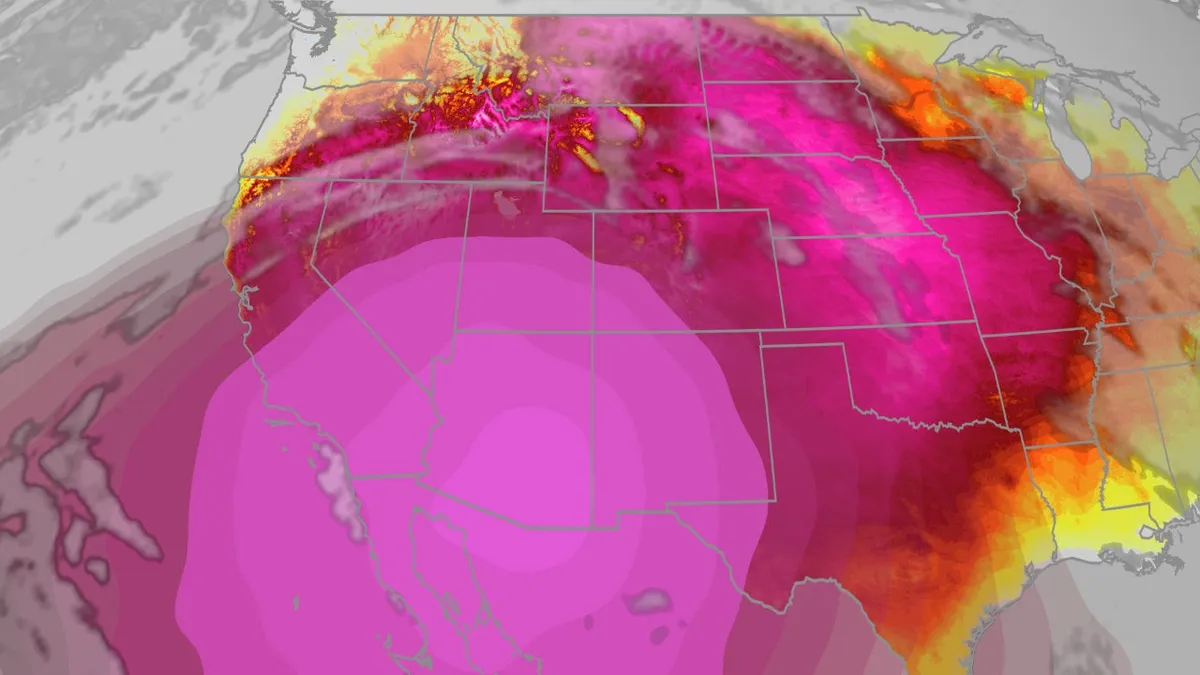
As the Western United States experiences an unprecedented heat wave, the region is grappling with the effects of a powerful heat dome. This phenomenon has led to record-breaking temperatures across several states, with the situation intensifying as March progresses.
On March 18, 2026, Phoenix recorded a staggering high of 102 degrees Fahrenheit, marking the earliest-ever triple-digit day in the city’s history. This extreme heat is not isolated; 65 cities, including Las Vegas at 94 degrees and Sacramento at 88 degrees, have tied or set new monthly record highs.
The heat dome is causing temperatures to soar 20-25 degrees above normal for this time of year in Phoenix. According to the National Weather Service, extreme heat warnings and advisories have been issued across the Southwest, as this heat wave could potentially set records for any March day in over 140 cities from California to Montana.
Experts note that the strength of this heat dome is comparable to those typically seen in June. Katherine Berislavich, a meteorologist, remarked, “We don’t usually see high-pressure systems this strong in the middle of March.” This unusual weather pattern has raised concerns about the implications for the region.
The average spring temperature in Maricopa County has increased by 3.9 degrees since 1970, highlighting the long-term trend of rising temperatures. Climate Central analysis indicates that the magnitude of this heat wave, by March standards, has been made at least five times more likely due to climate change.
Additionally, the snowpack in Colorado is at its lowest levels in at least two decades, contributing to a concerning outlook for the upcoming fire season. Shel Winkley, a Climate Central meteorologist, stated, “The moment we don’t have any snow left, that’s when fire season starts.” This early onset of heat could lead to an earlier fire season due to decreased snowpack.
As the heat wave continues, the Colorado River is facing the lowest levels of runoff in a quarter century, exacerbating water scarcity issues in the region. With 42 percent of average for California’s Sierra snowpack and only 36 percent of the 1991-2020 average inflow at Lake Powell, the situation is dire.
This historic March heat wave may be the most significant the nation has experienced since the March 2012 heat wave, underscoring the urgent need for awareness and action regarding climate change and its impacts on weather patterns.
As the situation develops, residents and officials alike are urged to stay informed and prepared for the ongoing heat, which poses risks to health, agriculture, and the environment.
