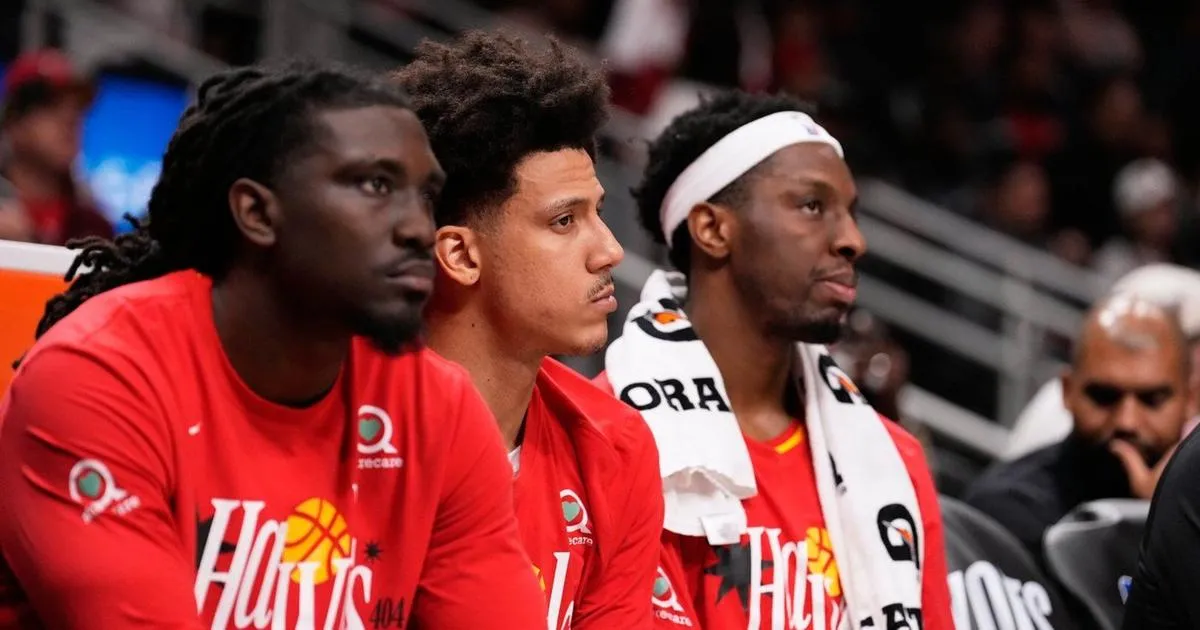
The Atlanta Hawks faced a stunning defeat on April 30, 2026, as they were eliminated from the NBA playoffs by the New York Knicks, who achieved their biggest playoff victory in franchise history with a score of 140-89.
This significant loss marked not only a disappointing end to the Hawks’ season but also highlighted several alarming statistics. The Knicks led by an astonishing 47 points at halftime—the largest halftime lead in playoff history. The Hawks struggled immensely, shooting only 12 for 39 from the field during the first half and committing 14 turnovers.
That context matters because it underscores just how unprepared the Hawks were for this crucial game. Jalen Johnson led his team with 21 points, but his efforts weren’t enough to counteract the Knicks’ dominating performance. Nickeil Alexander-Walker, who had an impressive regular season average of 20.8 points per game and won the Most Improved Player award, managed only 11 points in this critical match.
The Knicks’ victory tied for the sixth-largest margin of victory in NBA postseason history. They broke several records by halftime, including their commanding lead of 40-15 at the end of the first quarter—the largest of the shot clock era. Such statistics paint a vivid picture of how one-sided this game truly was.
But what does this mean for both teams moving forward? For the Hawks, this loss raises questions about their roster and overall strategy. Can they bounce back from such a devastating defeat? Meanwhile, for the Knicks, this victory serves as a strong statement about their potential in future playoff rounds.
Fans and analysts alike reacted swiftly to this historic game. One observer noted that “the Hawks were completely steamrolled” as their season came to an end. Another pointed out that Dyson Daniels and Mitchell Robinson were ejected after a confrontation following a pair of free throws that extended the Knicks’ lead to an incredible 50 points.
This defeat marks a pivotal moment for the Atlanta Hawks. With their season now over, they must regroup and reassess their approach if they hope to compete effectively in future seasons.
