In a surprising turn of events, Eric Swalwell announced the suspension of his campaign for Governor of California on April 13, 2026. This decision comes amid serious sexual assault allegations against him, which he has publicly denied. Swalwell, who was once considered the Democratic frontrunner in the race, has stated, “I will fight the serious, false allegations that have been made — but that’s my fight, not a campaign’s.” His withdrawal raises significant questions about the future of the gubernatorial race.
Swalwell’s campaign was marked by considerable fundraising success, having raised millions in contributions. However, the recent allegations, first reported by the San Francisco Chronicle, have overshadowed his political ambitions. The allegations involve incidents dating back to 2019 and 2024, and while Swalwell has denied them, the impact on his campaign has been profound.
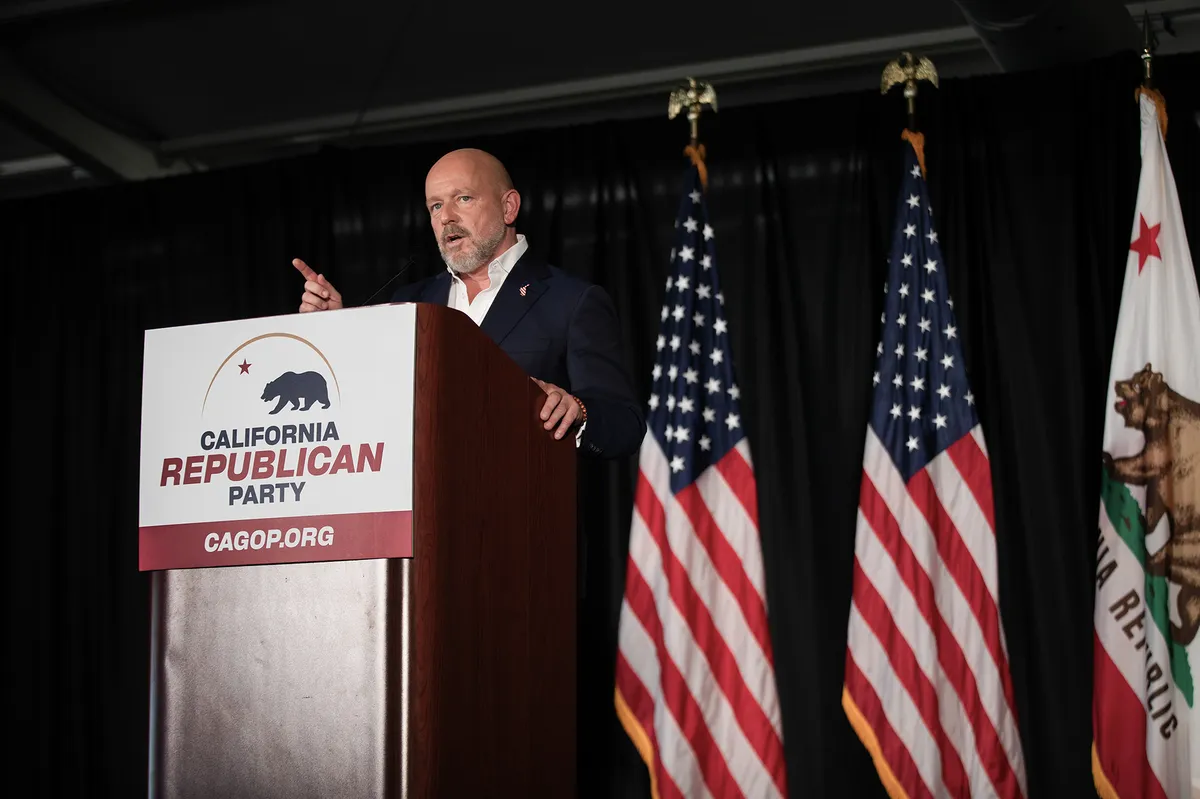
As Swalwell exits the race, the focus shifts to the remaining candidates. Among them, Steve Hilton has garnered attention after receiving Donald Trump’s endorsement. Hilton, along with fellow Republican Chad Bianco, recently participated in the California Republican Party convention, where Bianco received 49% of the votes and Hilton followed closely with 44%. Notably, neither candidate achieved the necessary 60% threshold for the party’s endorsement, indicating a divided Republican base.
Hilton’s fundraising efforts have also been impressive, with reports indicating he raised $6.6 million, which is $2 million more than Bianco. Despite the competitive fundraising landscape, Bianco has downplayed the significance of endorsements, stating, “Endorsements are silly,” and emphasizing that they do not change the dynamics of their campaign. He added, “This changes nothing about our campaign,” suggesting a focus on grassroots support rather than party endorsements.
The California gubernatorial primary is scheduled for June 2, 2026, and with Swalwell’s departure, the race is now more open than ever. The Democratic field still includes several established candidates, while the Republican side is led by Hilton and Bianco, both vying for the party’s nomination. The absence of Swalwell could shift the dynamics, allowing other Democratic contenders to gain traction.
Swalwell’s political career began when he was elected to the U.S. House in 2012, and he has since been a prominent figure in California politics. His sudden exit from the gubernatorial race marks a significant moment in his career and raises questions about the implications for the Democratic Party in California. The allegations against him, while denied, could have lasting effects on his political future.
As the race continues to evolve, reactions from both parties are expected to shape the narrative leading up to the primary. Candidates will likely adjust their strategies in light of Swalwell’s suspension, and the focus will remain on how the remaining candidates position themselves in this changing political landscape. With the primary just weeks away, the stakes are high for all involved.
