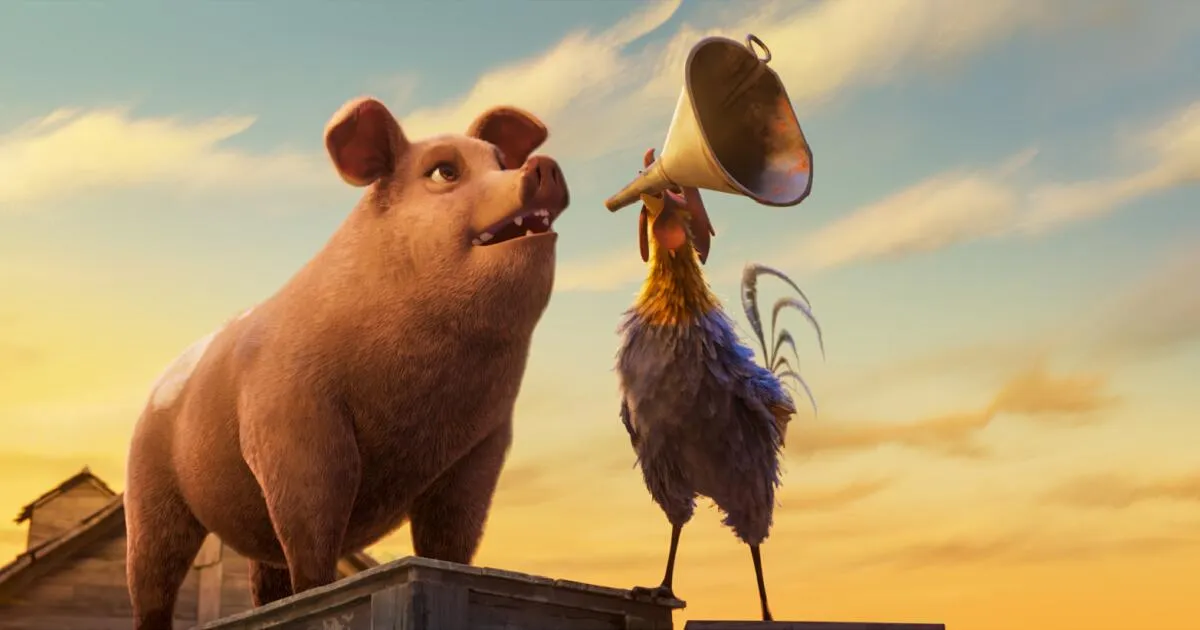
The new animated adaptation of Animal Farm controversially targets a younger audience while stripping away the original’s complex themes. Directed by Andy Serkis, this adaptation features prominent voices such as Seth Rogen as Napoleon and Laverne Cox as Snowball.
Before this adaptation, expectations revolved around the classic’s adult themes, which include a sharp critique of the Soviet Union and the corruption of power. Originally published in 1945, Animal Farm served as a profound political satire that explored moral messages through anthropomorphized animals.
However, everything changed with this new film—critics argue it oversimplifies the narrative and lacks depth. The film has faced backlash for its approach, described as overly simplistic for its intended young audience.
That context matters because it highlights the tension between preserving literary integrity and appealing to contemporary viewers. Some might wonder: can a children’s animation genuinely capture Orwell’s intricate themes? The answer seems to lean towards no.
Experts have noted that adaptations often reflect societal values and current trends. In this case, Angel Studios, known for its conservative values, produced a version that emphasizes anti-capitalism and populism without the nuanced critique present in Orwell’s original work.
The character of Napoleon is portrayed with traits reminiscent of Donald Trump, further polarizing opinions on the film’s political commentary. Such choices prompt questions about how effectively this adaptation can convey Orwell’s intended messages.
Interestingly, the film introduces a new character named Lucky, voiced by Gaten Matarazzo, to appeal more to children. Yet, many argue that adding characters does not compensate for losing the original’s critical depth.
Critics have remarked: “Some cartoons are decidedly less equal than others.” This sentiment underscores concerns about how adaptations can dilute significant narratives for younger audiences.
In essence, while this animated version aims to entertain children, it risks losing the rich historical context and moral complexity that made Animal Farm a literary classic. The adaptation raises vital discussions about how we present literature to future generations.
