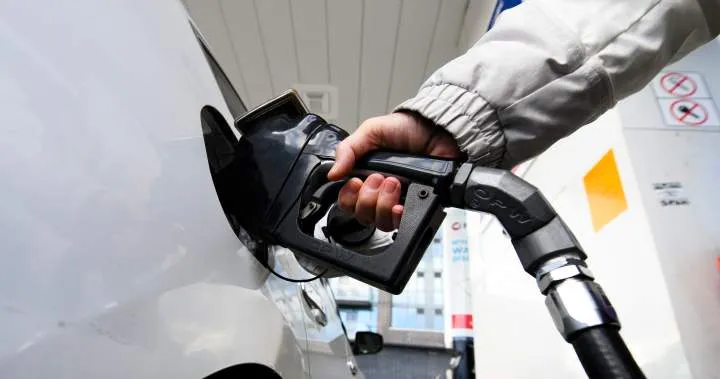
“Canadians are feeling the pressures of everyday expenses right now,” said Prime Minister Mark Carney, reflecting a growing concern among citizens about rising costs. Starting Monday, the Canadian federal government implemented a pause on excise taxes for gasoline and diesel fuel, a move designed to ease some of that financial burden.
This tax holiday will reduce prices by up to $0.10 per litre for gasoline and $0.04 per litre for diesel. It’s expected to cost the government approximately $2.4 billion. The average price for gasoline across Canada was noted at $1.69 per litre, a significant increase from $1.31 per litre just a year ago.
That context matters because it highlights the stark contrast in fuel prices year-on-year and underscores the urgency of this tax pause. Just last week, gas prices averaged $1.74 per litre, illustrating a slight decrease leading into this new policy.
In Newfoundland and Labrador, specific adjustments were made as well—gasoline prices decreased by 11.5 cents per litre, while diesel saw a reduction of 4.6 cents per litre. This localized drop is part of a broader national trend aimed at providing immediate relief.
The suspension of the excise tax will remain in place until September 7, marking a temporary but significant shift in how fuel is taxed in Canada. Notably, propane and furnace oil are exempt from this federal excise tax.
The ongoing U.S.-Iran war has also played a role in shaping global oil prices, creating an environment where consumers feel the effects of international conflicts at the pump. The Strait of Hormuz alone accounts for nearly 20 percent of all oil trade globally—a statistic that cannot be overlooked when discussing fuel economics.
Prime Minister Carney emphasized that this tax holiday could mean reduced fuel prices on gas by up to $0.28 per litre. Yet, it remains to be seen how effective this measure will be in stabilizing consumer costs long-term.
Conservative Leader Pierre Poilievre had previously urged the government to lift the fuel excise tax, indicating political pressure surrounding this issue. The government’s response suggests an acknowledgment of public sentiment regarding fuel affordability.
As Canadians navigate these changes, they will likely monitor fluctuations closely—both at the gas station and within their budgets. The coming weeks will reveal whether these efforts lead to sustained relief or merely act as a short-term fix amidst ongoing global uncertainties.
