Introduction
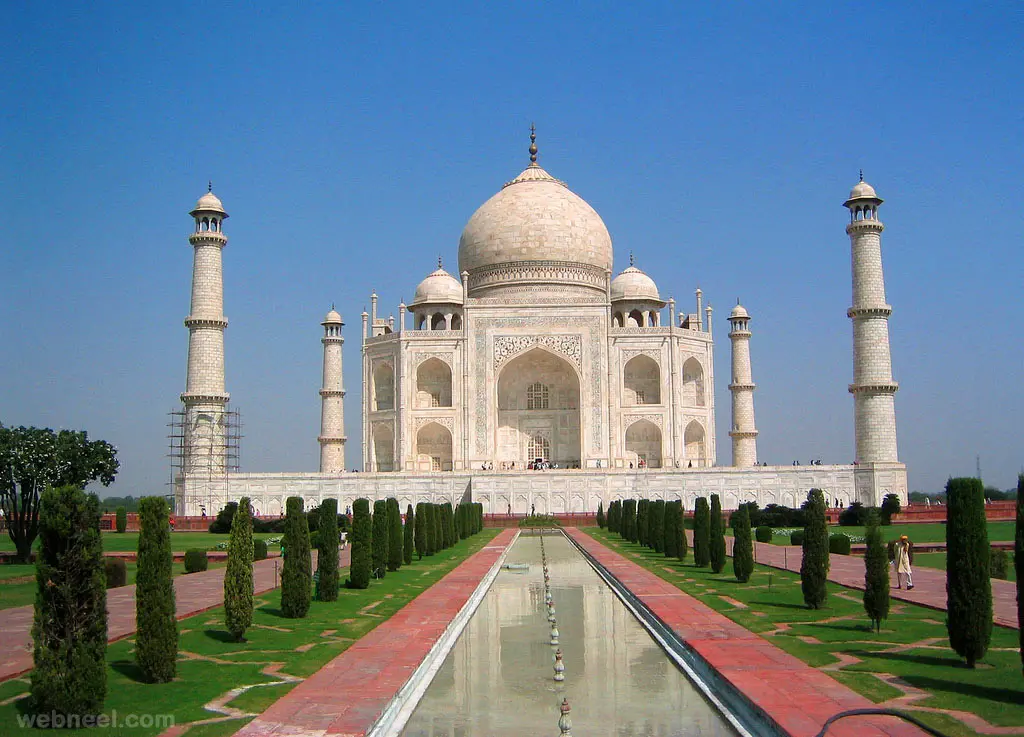
The Taj Mahal, a UNESCO World Heritage Site and one of the most iconic monuments in the world, attracts millions of visitors each year. Situated in Agra, India, this stunning mausoleum is renowned for its intricate architecture and historical significance, embodying the rich Mughal heritage. Its relevance extends beyond mere tourism; it represents the enduring love story of Emperor Shah Jahan for his wife Mumtaz Mahal, making it a profound symbol of love and beauty.
History and Construction
Commissioned in 1632 by Shah Jahan, the Taj Mahal was designed to house the tomb of his beloved wife Mumtaz Mahal, who died during childbirth. The construction took approximately 22 years and involved thousands of artisans and craftsmen. The monument is built primarily of white marble, which changes hue at different times of the day, creating a breathtaking visual experience. It is adorned with intricate carvings and inlaid gemstones, showcasing the exceptional artistry of the time.
Significance and Cultural Impact
The Taj Mahal is not only a remarkable architectural achievement but also an important cultural symbol for India. It showcases the finest expressions of Mughal architecture, combining elements from Persian, Islamic, and Indian styles. As a result, it has drawn attention from historians and architects alike for its aesthetic brilliance. In 1983, it was declared a UNESCO World Heritage Site, recognising its universal value and historical importance.
Current Events and Preservation Efforts
Recently, the Taj Mahal has faced challenges related to pollution and structural deterioration, prompting the Indian government to undertake significant restoration efforts. Initiatives have been launched to limit pollution in the Agra region, and strict measures are being enforced to preserve the monument’s integrity. The Archaeological Survey of India (ASI) is actively involved in monitoring the site and implementing conservation projects to ensure that the Taj Mahal remains a beloved landmark for future generations.
Conclusion
The Taj Mahal stands as a testament to the extraordinary artistry of its time and the enduring power of love. Its historical legacy and architectural grandeur make it a vital part of India’s cultural identity. As preservation efforts continue, the Taj Mahal not only remains a must-visit destination for tourists around the world but also serves as a reminder of the importance of safeguarding our global heritage for the future.
