Introduction
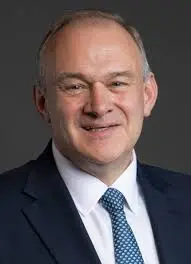
Ed Davey, the current leader of the Liberal Democrats, has become an influential figure in UK politics.
His leadership is particularly relevant in today’s political climate, where the need for progressive alternatives is felt strongly amidst a backdrop of socio-economic challenges and public discontent.
Background and Career
Ed Davey was born on December 25, 1965, in Salford, England. He studied at the University of Exeter, where he graduated with a degree in politics. Davey’s political career began in the late 1990s and he was first elected as the Member of Parliament (MP) for Kingston and Surbiton in 2010. During the coalition government with the Conservative Party from 2010 to 2015, he served as Secretary of State for Energy and Climate Change, promoting renewable energy initiatives and policies aimed at reducing carbon emissions.
Following the 2019 general election, where the Liberal Democrats faced significant losses, Davey was elected as party leader in August 2020, succeeding Jo Swinson. His election focused on the necessity for a strong, liberal democracy in a post-Brexit Britain and the urgent need for climate action, social justice, and education reform.
Recent Developments
In the lead up to and following the 2023 local elections, Ed Davey has been vocal in addressing issues such as the cost of living crisis, healthcare improvements, and the long-term impacts of austerity on public services. His party has gained traction among voters disillusioned with both Conservative and Labour approaches, especially in urban areas where local councils have seen deep cuts to services.
Polls suggest that the Liberal Democrats may play a critical role in the next general election, potentially winning back seats lost in recent years. With this, Ed Davey is focusing on establishing alliances with other progressive voices to enhance the party’s influence in upcoming political discussions.
Conclusion
Ed Davey’s leadership signifies a potential shift towards a more collaborative political landscape in the UK. As he continues to advocate for progressive policies addressing pressing social issues, the significance of his role for both the Liberal Democrats and the broader political environment cannot be overstated. The next few months could prove pivotal as the party prepares for upcoming elections and potential governmental changes. Readers should keep a close eye on Ed Davey and the Liberal Democrats as they contribute to shaping the future of British politics.
