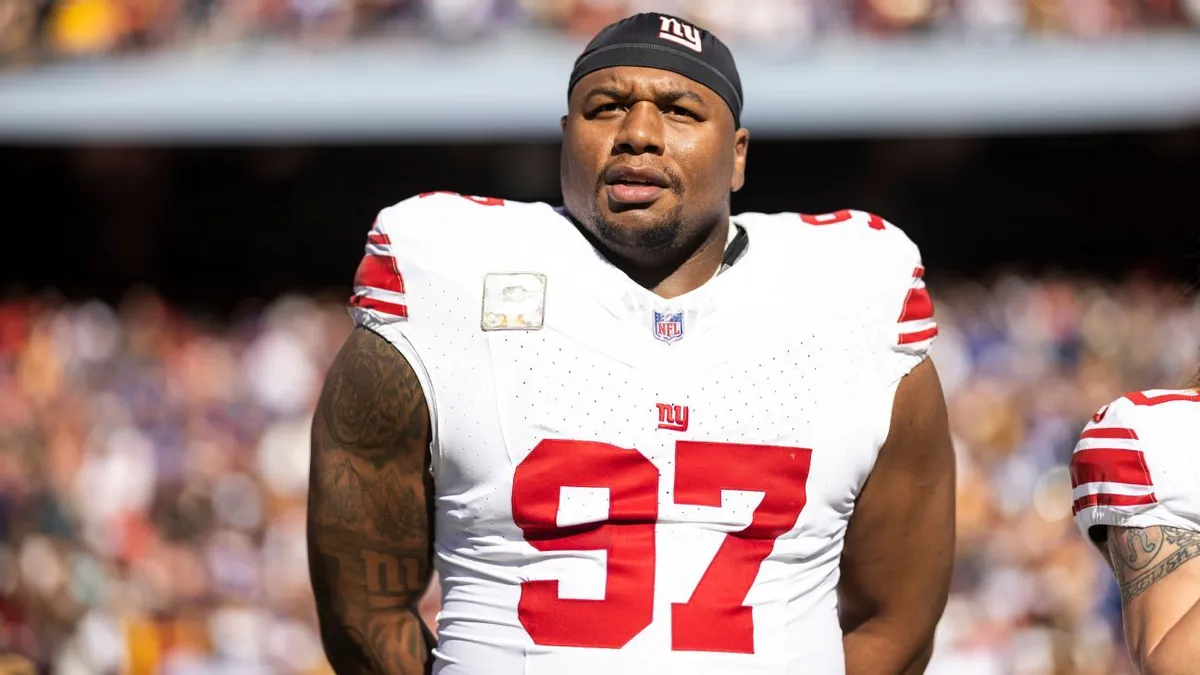
Who is involved
Dexter Lawrence, a prominent defensive tackle for the New York Giants, has made headlines with his recent trade request. This development marks a significant shift from the expectations surrounding his future with the team. Previously, Lawrence was viewed as a cornerstone player, integral to the Giants’ defensive lineup since he was drafted 17th overall in 2019. Over his seven seasons with the team, he has established himself as a key player, earning three Pro Bowl selections and being named a second-team All-Pro twice.
However, the landscape has changed dramatically. On April 6, 2026, Lawrence’s trade request became public, coinciding with his decision to skip the Giants’ offseason workout program. This decisive moment highlights a breakdown in contract negotiations that have persisted over multiple offseasons. Lawrence, who is 28 years old, has two years remaining on his contract, set to earn $20 million in the upcoming season and $19.5 million the following year. Despite these figures, his performance in the previous season raised eyebrows, as he recorded a career-low 31 tackles and just half a sack.
The immediate effects of this trade request are profound for both Lawrence and the Giants. For Lawrence, it signifies a desire for a fresh start and potentially a more lucrative contract elsewhere. For the Giants, this request places them in a challenging position. If they fulfill Lawrence’s request and place him on the trade block, he would immediately become the best available player on the market, a fact that could attract significant interest from other teams. However, the Giants also have the option to retain him, as trade requests are often standard negotiating tactics in the NFL.
Experts weigh in on the implications of this situation. John Harbaugh, a respected figure in the league, described Lawrence as “super, super important” to any team, emphasizing his role as a vital player. He referred to Lawrence as a “very big stone” in the middle of the defensive line, highlighting his athleticism and activity on the field. This perspective underscores the potential impact of losing a player of Lawrence’s caliber.
Moreover, Lawrence’s performance metrics from the previous season indicate a decline that may have contributed to his trade request. With only eight quarterback hits and a pass rush win rate of 8.3%, there are questions about his effectiveness on the field. Additionally, his four tackles for loss were the fewest since his rookie year, suggesting a need for revitalization in his career.
As the Giants navigate this situation, they must weigh the benefits of trading Lawrence against the potential disruption of their defensive strategy. Keeping Lawrence could provide stability, but it may also mean addressing his contract demands, which have been a point of contention. The Giants have the leverage to retain him, but they must also consider the long-term implications of his dissatisfaction.
In the coming weeks, the Giants will need to make critical decisions regarding Lawrence’s future. If they choose to trade him, they will likely seek substantial compensation, given his track record and potential. However, if they opt to keep him, they must engage in meaningful discussions to address his concerns and ensure he remains a productive member of the team.
Details remain unconfirmed regarding the exact nature of the trade talks or potential destinations for Lawrence. As the situation unfolds, both fans and analysts will be closely monitoring the Giants’ next moves and Lawrence’s future in the NFL.
