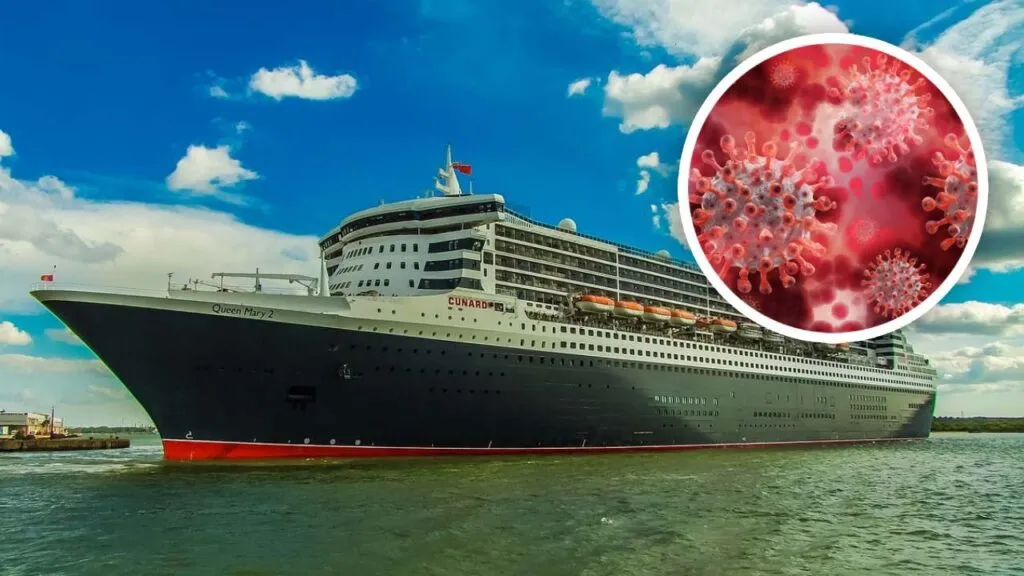
A suspected hantavirus outbreak on a luxury cruise ship has resulted in three deaths and left nearly 150 passengers, including four Canadians, stranded at sea off the coast of Cape Verde. Seven cases of hantavirus have been identified, with two laboratory-confirmed cases and five suspected. As health authorities scramble to manage the crisis, the situation remains fluid.
Among the deceased are a Dutch couple, aged 70 and 69, whose deaths have raised alarms about the potential severity of this rodent-borne illness. A British man evacuated to South Africa is in critical condition after testing positive for hantavirus, adding urgency to the investigation led by the World Health Organization (WHO) alongside local health officials.
Hantavirus can lead to hantavirus pulmonary syndrome, which manifests as a severe respiratory illness. It primarily spreads through contact with rodent droppings or urine—an unsettling fact for those aboard. The WHO has assessed that the risk to the wider public remains low, but that context matters because it underscores the need for stringent health protocols.
Key facts about the outbreak:
- Three deaths reported among infected individuals.
- Around 150 people, including four Canadians, are still on board the MV Hondius.
- The outbreak is under investigation by WHO and local health authorities.
Jake Rosmarin, a spokesperson for Oceanwide Expeditions, expressed concern: “There is a lot of uncertainty and that is the hardest part.” Strict precautionary measures are currently in place on board to prevent further spread of the virus. Yet, some experts suggest that person-to-person transmission could occur through contaminated aerosol vapor—though this remains rare.
As authorities work to determine the exact source of this outbreak, uncertainties loom large. Officials have not confirmed whether the Dutch couple succumbed to hantavirus or other health complications. Symptoms can appear one to eight weeks after exposure, complicating efforts to track down potential sources.
In light of these challenges, supportive care remains the primary treatment option for those affected by hantavirus. There is no specific cure available yet; thus, managing symptoms becomes critical for patient recovery.
