The Importance of the Issue
The news of Chinese astronauts potentially stranded in space is not only a significant concern for China’s expanding space programme but also raises questions regarding international standards in astronaut safety and space exploration collaboration. As nations increasingly invest in space travel and exploration, ensuring the safety and return of astronauts is paramount.
Recent Events
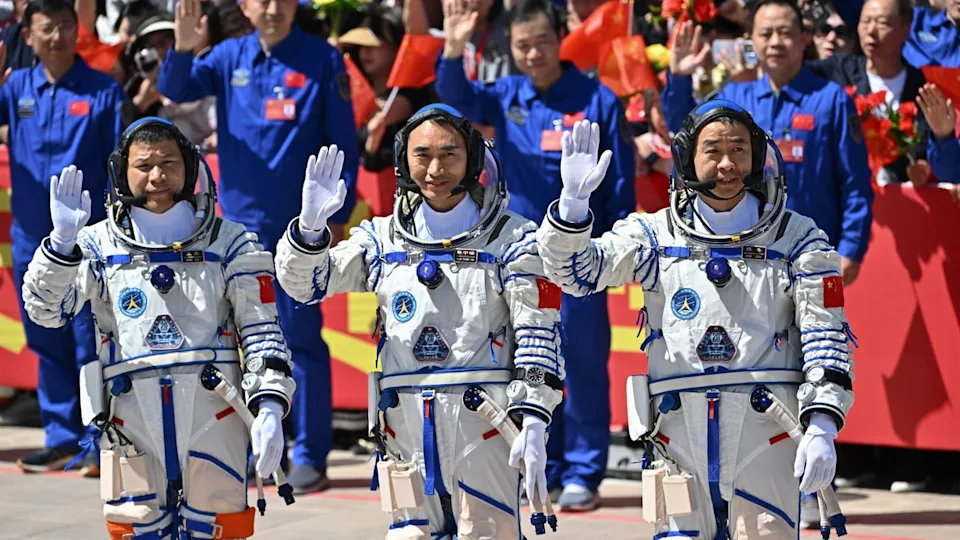
On March 26, 2024, reports emerged that a technical malfunction on the Shenzhou-13 spacecraft, which had successfully completed its mission to the Tiangong space station, prevented the return module from re-entering Earth’s atmosphere as scheduled. The Shenzhou-13 mission was intended to conclude with the safe return of crew members Zhang Zhiwei, Liu Ming, and Chen Guo after a 30-day stay at the Tiangong station.
The China National Space Administration (CNSA) has since activated emergency protocols. A follow-up spacecraft was scrambled to rendezvous with the stranded astronauts, while ground teams are attempting to rectify the issue remotely. The malfunction, which experts suspect may be related to the re-entry systems, has drawn international attention from space agencies and researchers alike.
Response from International Authorities
International space agencies, including NASA and ESA (European Space Agency), have expressed solidarity with the CNSA during this challenging time. NASA has offered technical assistance, underscoring the notion that collaboration in the realm of space exploration is critical, especially in crisis situations such as this. In 2021, astronauts from different countries, including China, completed joint missions aboard the International Space Station, highlighting the potential for cooperative problem-solving in space.
The Future of Space Missions
The stranded astronauts represent not only a moment of crisis but also a pivotal moment for future space missions. As this incident prompts a thorough investigation into safety protocols and emergency response systems, it reinforces the need for robust cooperative frameworks among global space agencies. Expectations are high that the stranded astronauts will be safely returned home, but the implications of this event may reshape how countries approach the logistics and safety of future manned spaceflights.
Conclusion
The plight of the Chinese astronauts serves as a timely reminder of the risks inherent in space exploration. As technology advances, it is essential to continually evaluate safety mechanisms to ensure astronauts return safely to Earth. As efforts to rescue the Shenzhou-13 crew continue, the importance of international cooperation in space exploration becomes increasingly evident, setting a precedent for how future missions may be conducted and managed.
