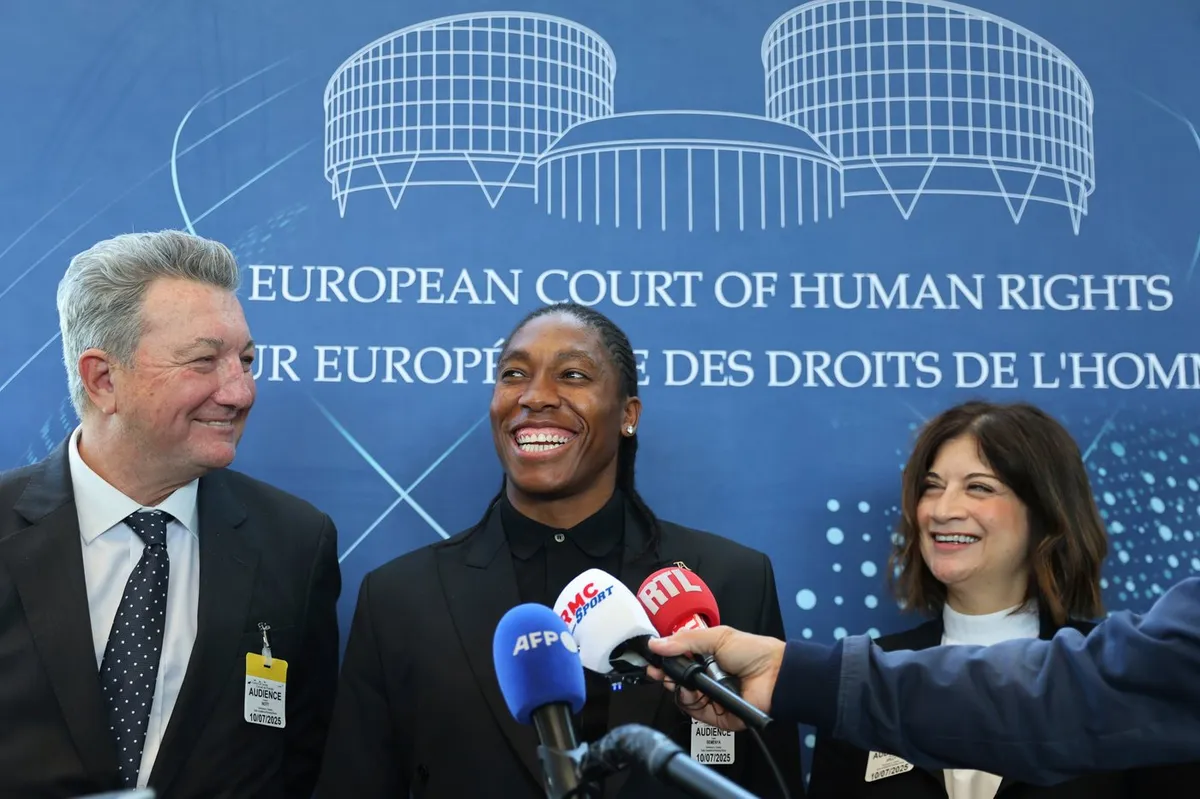
Before the recent developments, the landscape for athletes like Caster Semenya was fraught with uncertainty. Semenya, a South African middle-distance runner, has faced ongoing challenges regarding her eligibility to compete in women’s events due to her naturally high testosterone levels. Since 2019, she has been ineligible to compete in the women’s 800 meters, a situation that has drawn significant media attention and sparked debates about gender and fairness in sports.
However, a decisive moment occurred with the International Olympic Committee (IOC) announcing a new policy that bans transgender women from competing in female events at the Olympic Games. This policy also imposes restrictions on female athletes with differences in sex development (DSD), which directly affects Semenya. The IOC’s research indicates that being born male can provide physical advantages in sports, with male performance advantages ranging from 10-12% in most running and swimming events to as much as 100% in explosive power events.
The immediate effects of this policy have been profound. Semenya, who has refused to medically reduce her testosterone levels to comply with eligibility regulations, criticized the IOC for ignoring the experiences of athletes like herself. “I will not be used as a token voice,” she stated, emphasizing her stance against the new regulations.
Furthermore, the IOC’s policy is not retroactive and does not apply to grassroots or recreational sports programs, as clarified by the organization. This means that while elite-level competitions will see these new restrictions, local and community-level events remain unaffected.
Experts have raised concerns about the scientific basis of the IOC’s policy, suggesting it lacks sufficient evidence and could risk harm to young athletes. The IOC consulted over 1,000 athletes before implementing the new policy, yet critics argue that the decision reflects political pressures rather than a commitment to scientific integrity.
As the situation unfolds, the implications for athletes like Semenya remain significant. With the IOC’s policy set to apply to all Olympic events, including youth competitions, the landscape for female athletes with DSD is changing rapidly. The IOC’s document highlights the potential for male performance advantages, which has led to heightened scrutiny of fairness in women’s sports.
Details remain unconfirmed regarding the exact impact of the new IOC policy on future competitions and athletes. As the debate continues, the experiences of athletes like Semenya will likely play a crucial role in shaping discussions around gender equity in sports.
