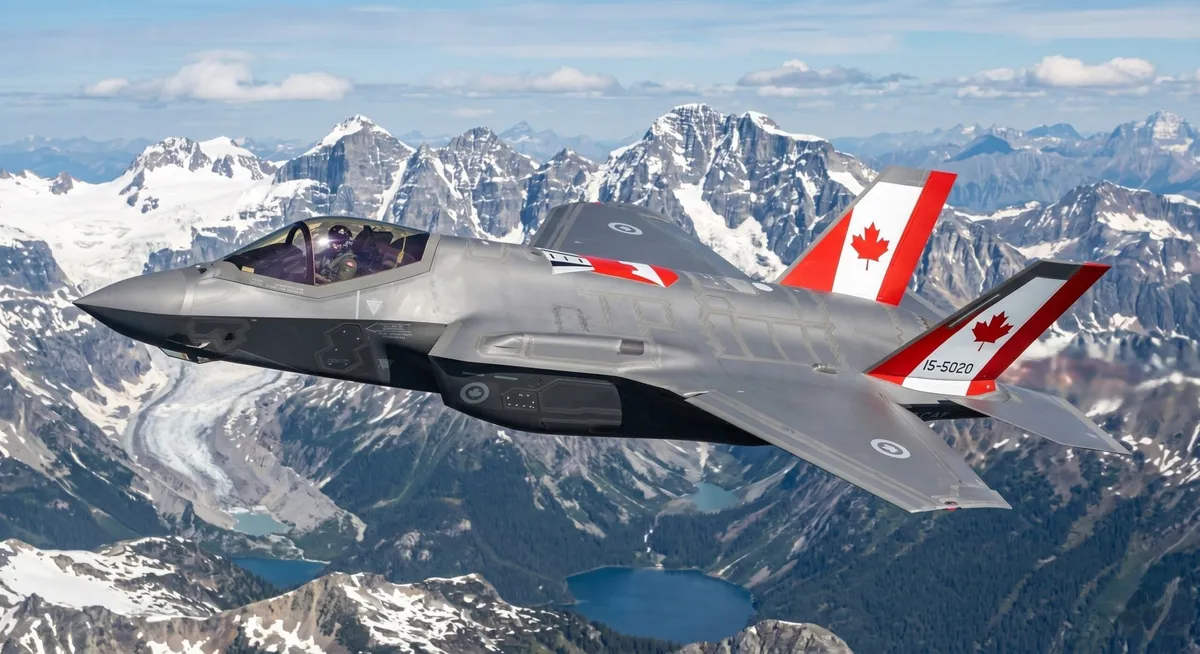
“The review of the purchase of the F-35s is continuing,” said David McGuinty, highlighting the uncertainty surrounding Canada’s $19 billion CAD plan to acquire 88 F-35A Lightning II fighter jets. As the Royal Canadian Air Force (RCAF) weighs its options, this decision becomes increasingly critical amid evolving geopolitical threats.
That context matters because Canada signed an agreement to purchase these advanced jets in early 2023, intending to replace its aging CF-18 fleet. However, Prime Minister Mark Carney’s order for a review disrupted this deal, leaving officials without a clear timeline for a decision.
Key facts about Canada’s fighter jet situation:
- Canada has not set a timeline for deciding on its $19 billion CAD plan to acquire 88 F-35A Lightning II fighter jets.
- The review of the F-35 purchase was launched in March 2025 and is ongoing.
- Saab has made offers to convince Canada to operate a mixed fleet of F-35s and Gripen fighter jets.
- RCAF officials have stated that the F-35 is still Canada’s best option for a fifth-generation fighter.
Meanwhile, Saab has proposed assembling Gripen jets in Canada, along with transferring significant intellectual property. This could sway public sentiment, which currently pushes policymakers to reconsider reliance on U.S. defense systems. But will this be enough?
Germany and Finland have accelerated their F-35 procurements amid concerns about growing threats from Russia and China. In contrast, Canada appears to be treading carefully while reviewing its options. The HIMARS deal with the U.S., valued at approximately $2.4 billion CAD, also factors into Canada’s broader military procurement strategy.
As McGuinty pointed out, “There is a concrete contradiction between what the prime minister said about shifting the ratio of dollars spent in the United States to dollars being spent in Canada.” This contradiction underscores the complex balancing act facing Canadian defense officials.
The RCAF’s choice will not only impact national security but also shape Canada’s defense industry landscape. Currently, 110 Canadian companies participate in the F-35 program, supporting around 12,500 jobs. How many HIMARS systems will be going to the Canadian Armed Forces remains unclear, just as any potential delivery timeline for these systems is still a mystery.
