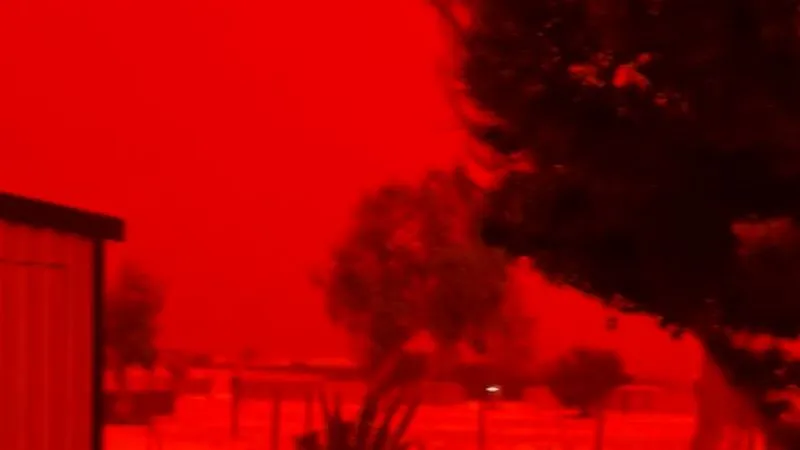
Tropical Cyclone Narelle has made headlines as it approaches the Shark Bay area of Western Australia, creating a striking red sky that has captivated and alarmed residents. The cyclone made landfall four times, intensifying the situation as locals prepared for the storm’s impact.
As the cyclone approached, residents reported a sky that appeared to be ablaze with streaks of fiery orange and red. Videos circulating on social media depicted the phenomenon, with many describing the scenes as having an ‘apocalyptic’ feel.
This unusual red sky was caused by strong winds that lifted iron-rich red soil and dust into the atmosphere. The phenomenon was further intensified by Mie scattering, which enhanced the red and orange tones, resulting in a blood-red appearance in the sky.
Sunlight, which consists of all colors of the rainbow, interacts with gas molecules and dust particles in the air. During dawn or dusk, sunlight travels through a thicker layer of the atmosphere, filtering out shorter blue wavelengths and leaving longer reds. High levels of dust, smoke, or pollution can make these red hues even more vivid.
One local shared their experience on Facebook, stating, “Incredibly eerie outside, and everything is covered in dust. Not a lot of wind yet.” This sentiment reflects the unsettling atmosphere as the cyclone draws nearer.
The phrase ‘red sky in the morning’ is often associated with weather predictions, indicating the sun reflecting off incoming clouds from the west. In this case, the dramatic sky serves as a visual warning of the cyclone’s impending arrival.
As the situation develops, officials are closely monitoring the cyclone’s path and its potential impact on the region. Residents are advised to stay informed and prepared as Tropical Cyclone Narelle continues to approach.
Details remain unconfirmed regarding the full extent of the cyclone’s impact, but the red sky phenomenon has certainly left a lasting impression on those witnessing it.
