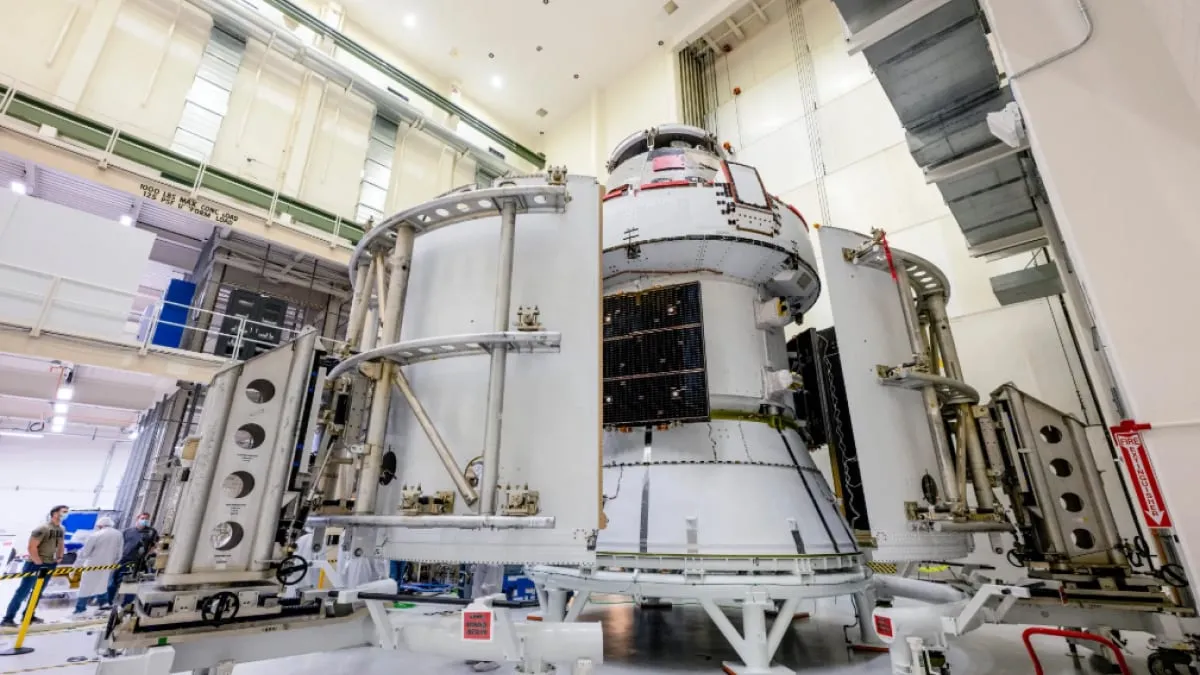
The Artemis 2 mission is set to conclude with a splashdown in the Pacific Ocean off the coast of San Diego on October 3, 2023, at 8:07 p.m. ET. This event marks a pivotal moment for NASA as it continues its journey back to the Moon and beyond.
During re-entry, the spacecraft will reach speeds of nearly 40,000 km/h and experience temperatures soaring to approximately 3,000 C. The astronauts aboard will endure nearly 4 Gs as they re-enter the Earth’s atmosphere, a testament to the intense conditions of space travel.
The re-entry sequence is expected to last around 14 minutes, during which two drogue parachutes will deploy at about 22,000 feet (6,705 m), followed by three main parachutes at approximately 1,800 metres. This carefully orchestrated sequence is crucial for ensuring a safe landing.
Upon splashdown, the astronauts will be recovered by the USS John P. Murtha, which is equipped to facilitate their safe return. After medical evaluations, the crew will head back to the Johnson Space Center in Houston.
Victor Glover, one of the astronauts, expressed the profound experience of re-entry, stating, “Riding a fireball through the atmosphere is profound, as well. I’m gonna be thinking about and talking about all of these things for the rest of my life.” His sentiments reflect the significance of this mission not only for the astronauts but for the future of space exploration.
NASA has made significant adjustments to its re-entry procedures following the uncrewed Artemis I mission, ensuring that the Artemis II landing is as safe as possible. The heat shield used for this mission is called Avcoat, designed to withstand the extreme conditions of re-entry.
As the mission unfolds, details remain unconfirmed regarding the exact conditions during splashdown and the immediate recovery process. However, preparations are in place to ensure the astronauts’ safety and well-being.
With the European Space Agency collaborating on this mission, the Artemis II landing represents a step forward in international cooperation in space exploration. This mission is a follow-up to the uncrewed Artemis I mission, emphasizing the importance of human presence in future lunar endeavors.
As the world watches, the excitement builds around the successful completion of the Artemis II mission, paving the way for future explorations beyond our planet.
