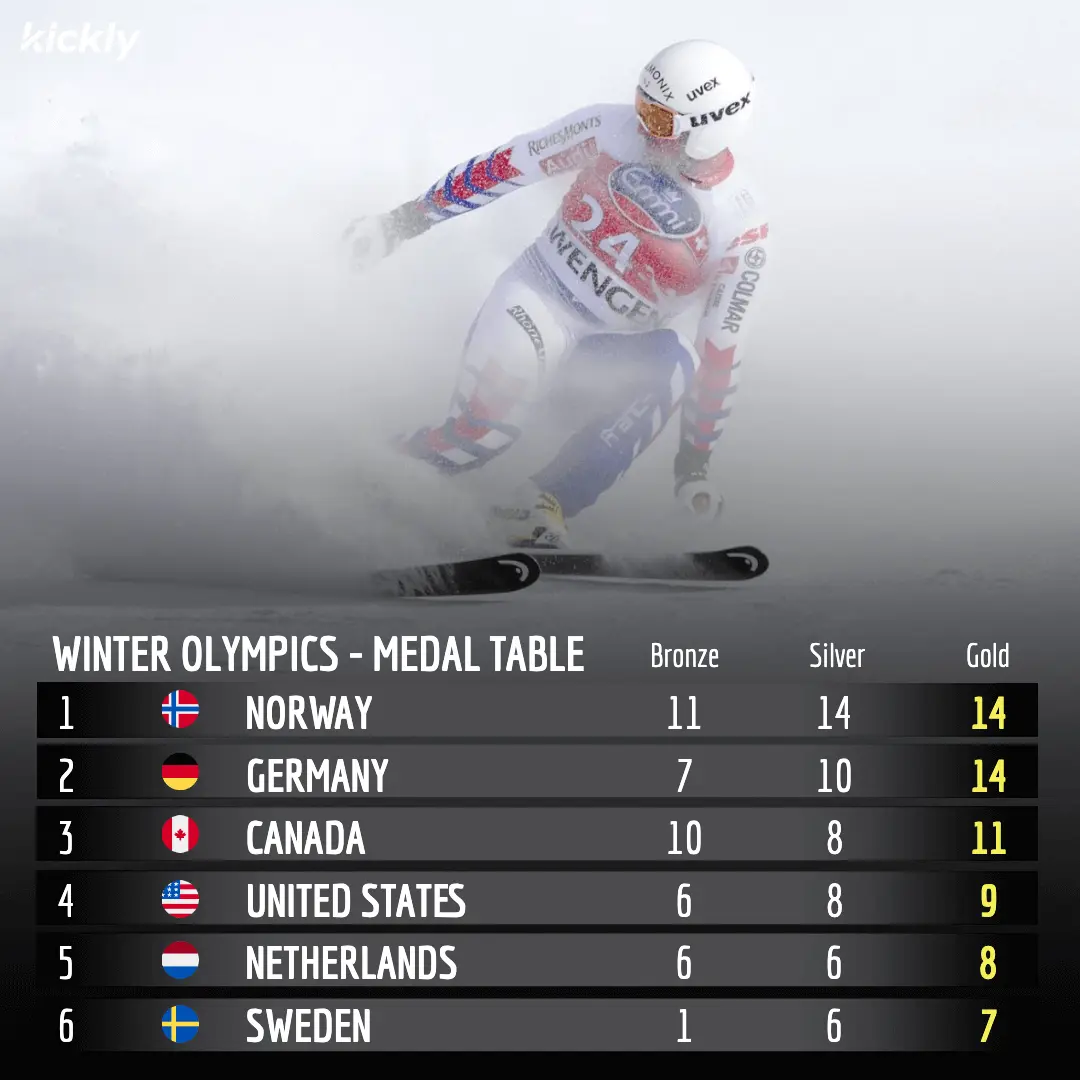
Importance of the Winter Olympics Medal Table
The Winter Olympics is a global sporting event that garners immense attention and excitement every four years. The medal table serves as a primary measure of a nation’s success, showcasing outstanding performances of athletes across a range of winter sports. As the world turns its eyes to the upcoming Winter Olympics in 2026, understanding the medal table becomes crucial for fans and analysts alike.
Latest Medal Table Statistics
As of the most recent Winter Olympics held in Beijing 2022, nations around the globe showcased their prowess, with Norway topping the medal table by winning 37 medals, including 16 golds. Germany followed closely with 27 medals, while Canada and the United States also ranked high, reflecting their historical strength in winter sports.
According to the International Olympic Committee, the standings are determined not just by the number of total medals, but by the number of golds won, followed by silvers and bronzes. This system adds a competitive edge, often making the race for the top position exceptionally exciting for viewers and participants alike.
Key Factors Influencing the Medal Tally
The performances in the Winter Olympics are influenced by several factors including funding, athlete preparation, weather conditions, and the specific strengths of national teams in various sports. For instance, countries like Norway have invested heavily in skiing programs, allowing them to dominate in events such as cross-country skiing and biathlon. In contrast, nations like Jamaica have focused on bobsledding, achieving remarkable success against the odds.
Looking Ahead: Future Prospects
As the Winter Olympics in Milan and Cortina d’Ampezzo approaches, many nations are ramping up their training programmes to secure a favourable position in the medal table. Analysts predict an increasingly competitive environment, with countries such as China steadily rising in the ranks following a strong showing in 2022. Moreover, with new sports being introduced into the Olympics, nations may shift their focus to gain an advantage in emerging competitive areas.
Conclusion
The Winter Olympics medal table is more than just a numbers game; it is a reflection of national pride and the culmination of countless hours of training and dedication. As the excitement builds towards the next edition of the Games, fans can expect intense competition and possibly a reconfiguration of the medal standings. Remembering the impact of teamwork, individual effort, and national support will be essential as we cheer on our athletes for glory on the world stage.
